
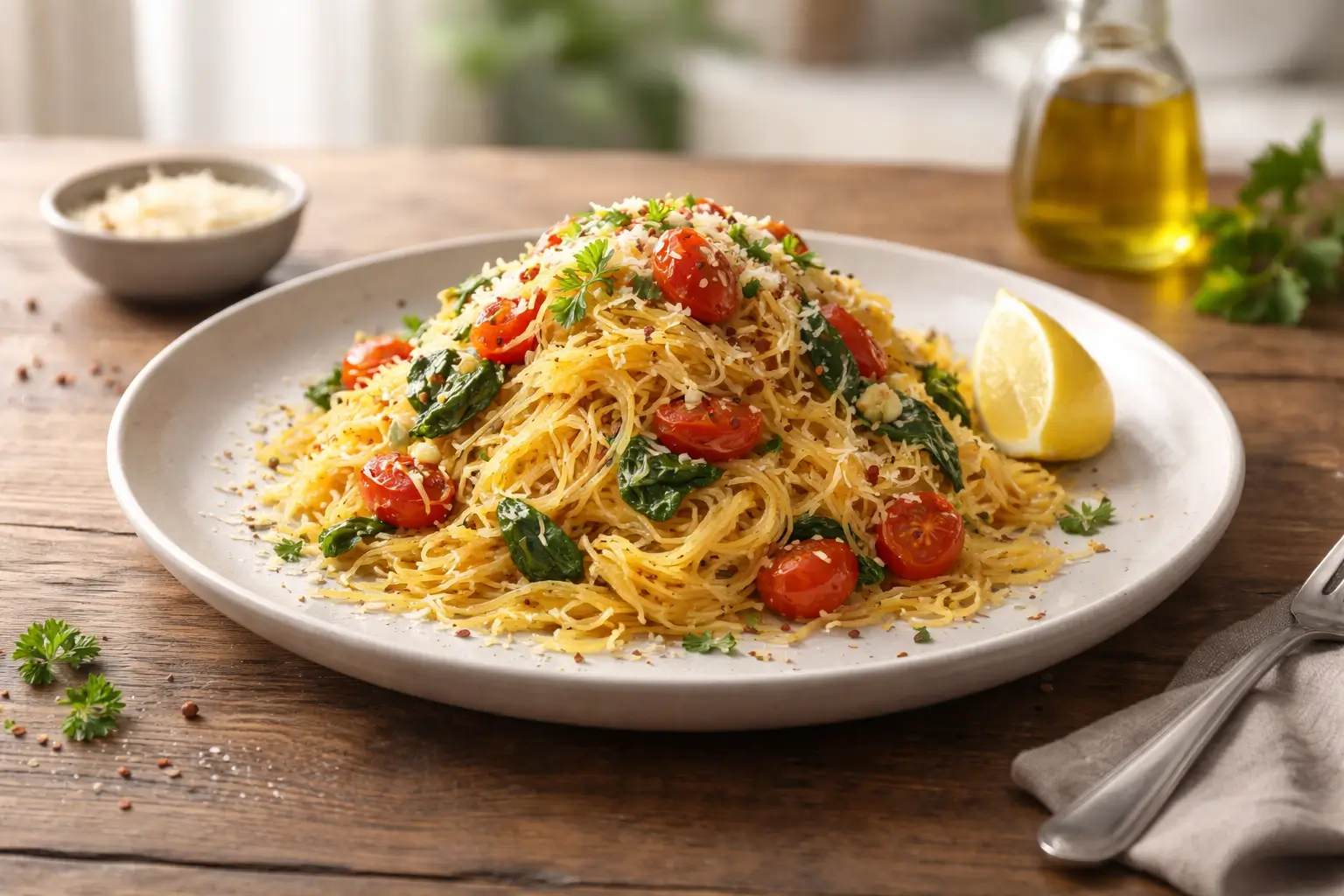
Spaghetti squash is one of those ingredients that surprises people the first time they make it well. At a glance, it looks like any other winter squash. But once roasted and scraped with a fork, the inside turns into tender, noodle-like strands that can be served simply with butter and herbs or dressed up with sauces, cheese, and protein.
That texture is exactly why spaghetti squash has become so popular. It gives you the comfort of a pasta-style dish with a lighter feel, and it works beautifully in everything from weeknight dinners to meal prep lunches. It is also one of the easiest vegetables to make once you know the right roasting method.
I like spaghetti squash because it is versatile without being bland. When undercooked, it can feel watery and disappointing. When roasted properly, though, it becomes slightly sweet, tender, and just firm enough to hold sauces well. This recipe keeps things simple with olive oil, garlic, Parmesan, and herbs, so the squash stays the star while still tasting complete and satisfying.
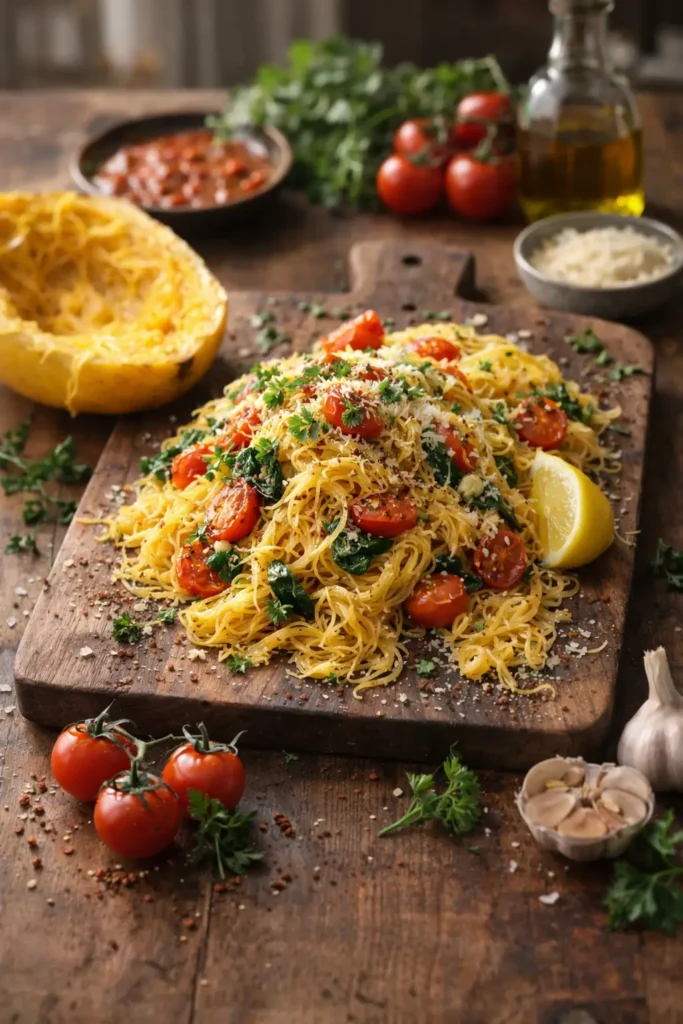
Why You’ll Love This Spaghetti Squash Recipe
A good spaghetti squash recipe should be easy, practical, and full of real flavor. This one checks all the right boxes.
It uses simple pantry ingredients
It is naturally lighter than traditional pasta dishes
It works as a side dish or a main meal base
It is easy to customize with sauces, cheese, or protein
It is great for meal prep and reheats well
This is also the kind of recipe that helps if you are trying to add more vegetables to your meals without feeling like you are eating something plain or forced.
Equipment
Sharp chef’s knife
Cutting board
Spoon
Baking sheet or roasting pan
Parchment paper, optional
Small mixing bowl
Pastry brush or spoon
Fork
Oven mitts
Ingredients
1 medium spaghetti squash
2 tablespoons olive oil
3 cloves garlic, minced
1 teaspoon salt
1/2 teaspoon black pepper
1 teaspoon Italian seasoning
1/4 cup grated Parmesan cheese
2 tablespoons chopped fresh parsley
1 tablespoon unsalted butter, optional
Red pepper flakes, optional for serving
Timing and Servings
Prep Time: 10 minutes
Cook Time: 35 to 45 minutes
Total Time: 50 to 55 minutes
Servings: 4
How to Make Spaghetti Squash
Prepare the squash
Preheat your oven to 400°F (200°C).
Place the spaghetti squash on a sturdy cutting board and carefully cut it in half lengthwise. Use a spoon to scoop out the seeds and stringy center, just like you would with a pumpkin.
If the squash feels very firm and difficult to cut, microwave it for 2 to 3 minutes first. That softens the outer skin slightly and makes it easier to handle safely.
Season the squash
In a small bowl, mix the olive oil, minced garlic, salt, black pepper, and Italian seasoning.
Brush or spoon this mixture over the cut sides of the squash. Make sure the surface is evenly coated so the flavor reaches every strand as it roasts.
This step matters more than people think. Spaghetti squash has a mild flavor, so seasoning before roasting makes a big difference.
Roast until tender
Place the squash halves cut-side down on a lined baking sheet or roasting pan.
Roast for 35 to 45 minutes, depending on the size of the squash. It is done when the shell gives slightly when pressed and a fork can easily pierce the flesh.
Try not to overbake it. If spaghetti squash cooks too long, the strands can become mushy instead of tender and lightly separate.
Scrape into strands
Let the squash cool for about 5 to 10 minutes, just enough so it is easier to handle.
Use a fork to scrape the inside flesh. It will naturally pull away in thin strands that look like spaghetti. Scrape from side to side rather than mashing down into the center. That helps keep the strands longer and more defined.
Transfer the strands to a bowl.
Finish and serve
Add the Parmesan cheese, chopped parsley, and butter if using. Toss gently until combined.
Taste and adjust with extra salt, black pepper, or red pepper flakes if needed. Serve warm.
This simple finish gives the squash enough richness and flavor to stand on its own, but it also leaves plenty of room to pair it with sauces or proteins.
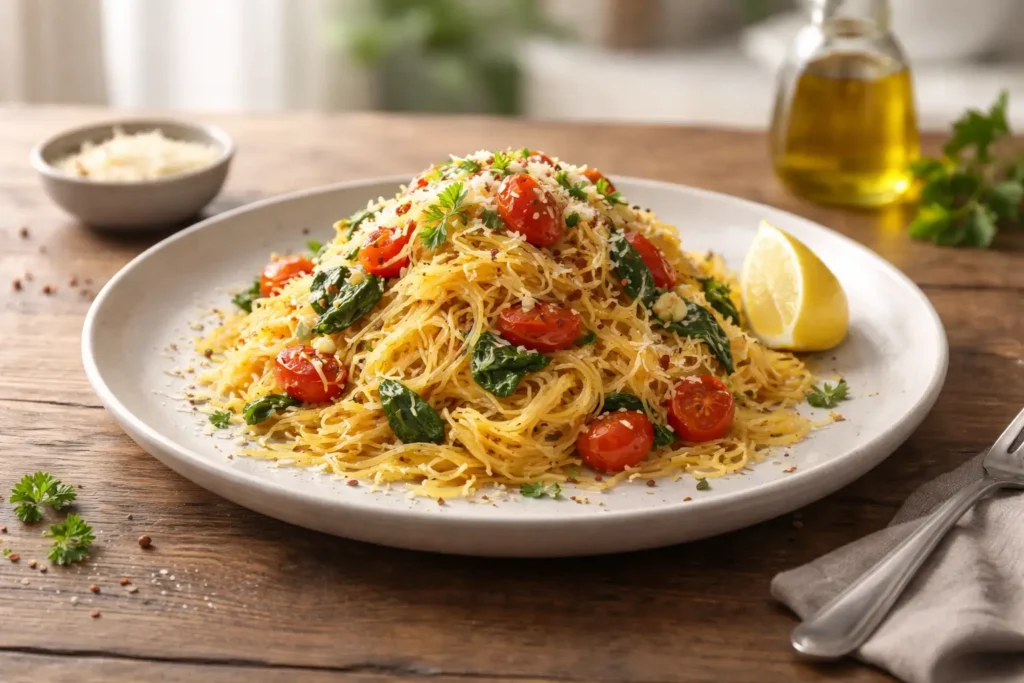
Tips for the Best Spaghetti Squash
Choose the right squash
Look for a spaghetti squash that feels heavy for its size and has firm, dry skin without soft spots. A medium squash is often easiest to roast evenly and handle in the kitchen.
Roast cut-side down
Roasting the squash cut-side down helps trap steam slightly while still letting the edges caramelize. This gives you tender strands without drying the squash out.
Do not overcook it
This is one of the most common mistakes. The goal is tender strands with a little bite, not a soft mash. Start checking around the 35-minute mark.
Scrape gently with a fork
A fork works best for separating the flesh into spaghetti-like strands. Scraping too aggressively can break them up and make the texture less appealing.
Add flavor after roasting
Spaghetti squash is mild by nature, so finishing it with cheese, herbs, butter, lemon, garlic, or sauce is what makes it taste complete.
What Does Spaghetti Squash Taste Like?
Spaghetti squash has a mild, slightly sweet flavor. It is not meant to taste exactly like pasta, even though the texture looks similar. Instead, think of it as a light, tender squash that happens to form strands.
That is why it works so well with sauces and seasonings. It takes on other flavors easily while still bringing its own gentle sweetness to the dish.
If you go into it expecting a perfect pasta replacement, you may miss what makes it good. If you treat it as its own ingredient, it becomes much easier to enjoy.
Best Ways to Serve Spaghetti Squash
One of the best things about spaghetti squash is how flexible it is. Once roasted, it becomes a base for all kinds of easy meals.
Serve it with marinara sauce
A spoonful of marinara, extra Parmesan, and fresh basil turns roasted spaghetti squash into a light pasta-style dinner.
Add chicken or turkey
Grilled chicken, shredded rotisserie chicken, or ground turkey makes it more filling and turns it into a complete main dish.
Toss it with pesto
Pesto works especially well because the mild squash lets the basil, garlic, and Parmesan stand out.
Make it creamy
A little Alfredo sauce or a light cream sauce can make spaghetti squash feel more comforting and indulgent without getting too heavy.
Keep it simple
Sometimes butter, Parmesan, herbs, and cracked black pepper are all it needs. This is my favorite way when I want a quick side dish.
Easy Variations to Try
Once you know the basic method, spaghetti squash becomes very easy to adapt.
Garlic herb spaghetti squash
Add more fresh herbs like thyme, oregano, or basil for a brighter, fresher finish.
Cheesy baked spaghetti squash
Mix the roasted strands with mozzarella and Parmesan, then bake for a few minutes until melted and golden.
Spicy spaghetti squash
Add red pepper flakes, smoked paprika, or a drizzle of chili oil if you want a little heat.
Lemon Parmesan spaghetti squash
A small squeeze of lemon juice at the end brightens the dish and pairs especially well with the Parmesan.
Storage and Reheating
Store leftover spaghetti squash in an airtight container in the refrigerator for up to 4 days.
To reheat, warm it in a skillet over medium-low heat or microwave it in short intervals. If it seems dry, add a small pat of butter or a drizzle of olive oil before reheating.
You can also roast the squash ahead of time and use it through the week in meal prep bowls, quick lunches, or dinner sides.
Nutritional Facts
Calories: Approximately 140 per serving
Carbohydrates: 12g
Protein: 4g
Fat: 9g
Fiber: 3g
Sugar: 5g
Sodium: 420mg
Conclusion
Spaghetti squash is one of the easiest ways to make a meal feel lighter without giving up comfort or flavor. When roasted properly, it turns into tender, delicate strands that work beautifully with simple seasonings, rich sauces, or protein-packed toppings. It is practical, flexible, and far more satisfying than many people expect.
This recipe keeps the method straightforward while giving the squash enough flavor to stand on its own. Whether you serve it as a side dish, use it instead of pasta, or build a full dinner around it, spaghetti squash is a dependable ingredient worth keeping in your regular rotation.
FAQs
Do you have to peel spaghetti squash before cooking?
No, the skin stays on during roasting. Once cooked, the flesh easily separates from the shell with a fork.
How do I know when spaghetti squash is done?
It is done when the flesh is tender and a fork easily scrapes it into strands. The shell should also give slightly when pressed.
Does spaghetti squash taste like pasta?
Not exactly. It has a mild, slightly sweet squash flavor, but its strand-like texture makes it a great base for pasta-style dishes.
Can I make spaghetti squash ahead of time?
Yes. You can roast it ahead and store the strands in the refrigerator for up to 4 days.
What sauce goes best with spaghetti squash?
Marinara, pesto, garlic butter, Alfredo, and brown butter sauces all work well depending on how light or rich you want the dish.
Why is my spaghetti squash mushy?
It is usually overcooked. Check it earlier next time and remove it once the strands are just tender.