
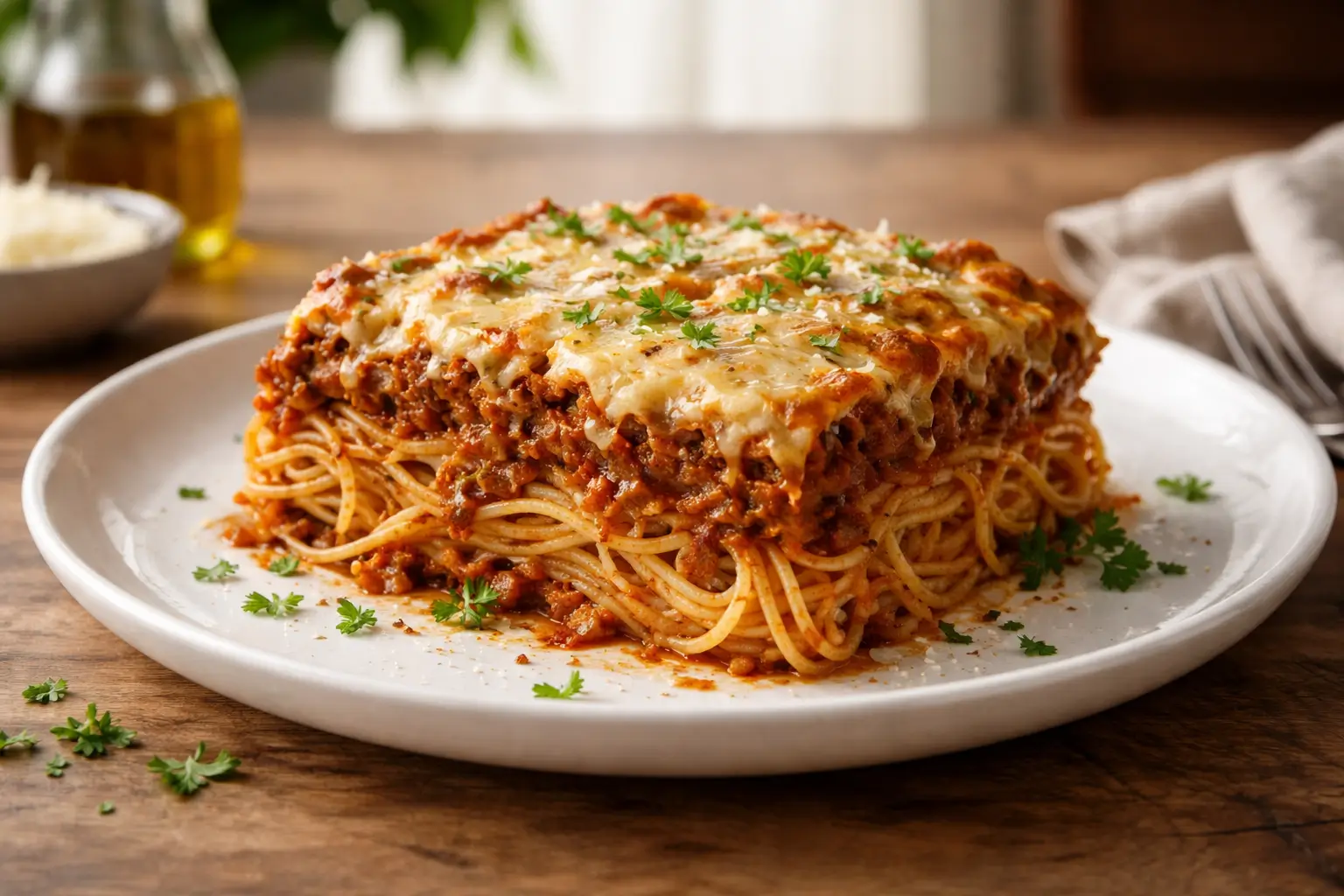
Spaghetti casserole is one of those dinners that feels instantly familiar and comforting. It takes everything people already love about spaghetti night—tender pasta, rich meat sauce, melted cheese—and turns it into a baked dish that is even more satisfying. The top gets bubbly and golden, the layers settle together beautifully, and every scoop feels hearty enough to stand on its own.
What makes spaghetti casserole so useful is how practical it is. It feeds a family, works well for potlucks, reheats beautifully, and can even be made ahead when the week looks busy. It also has that dependable, crowd-pleasing quality that makes it a safe choice when you need a dinner most people will happily eat without complaint.
I like this recipe because it strikes the right balance between easy and homemade. It uses simple ingredients, but the finished casserole tastes rich, layered, and comforting in a way that feels more special than basic spaghetti. If you want a baked pasta dish that is filling, cheesy, and reliable, this spaghetti casserole deserves a spot in your regular dinner rotation.
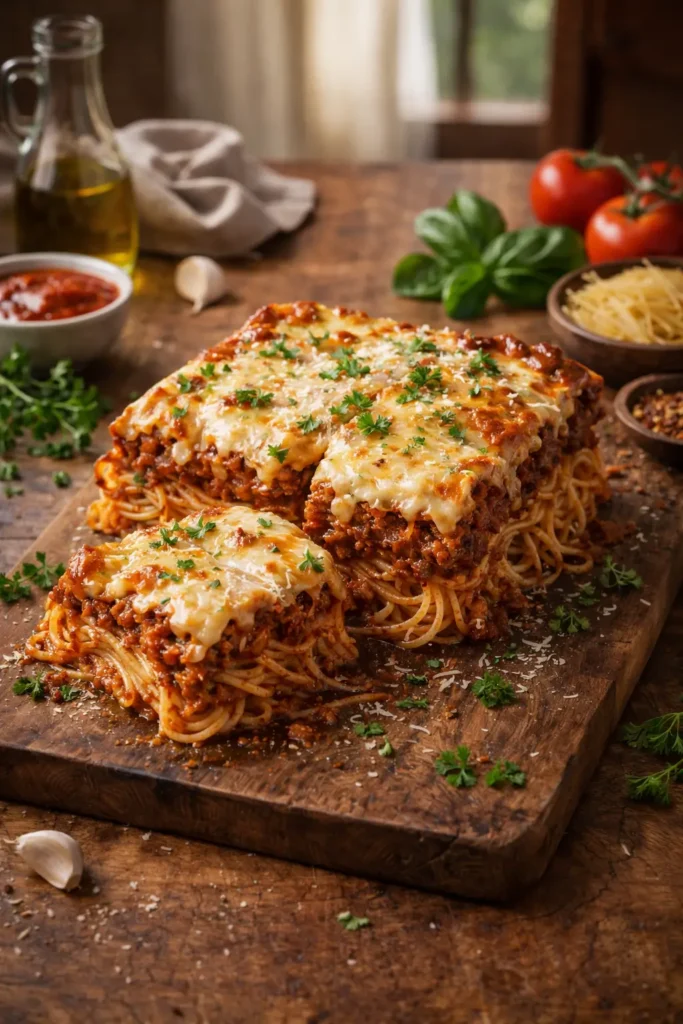
Why You’ll Love This Spaghetti Casserole
There are plenty of baked pasta recipes, but this one earns its place because it is both easy and deeply comforting.
It uses simple, familiar ingredients
It is perfect for family dinners and leftovers
The cheese makes it rich without being complicated
It can be prepared ahead of time
It is easy to customize with extra vegetables or different meats
This is the kind of recipe that works especially well when you want dinner to feel generous and homemade without spending all evening in the kitchen.
Equipment
Large pot
Large skillet or sauté pan
9×13-inch baking dish
Colander
Mixing bowls
Wooden spoon or spatula
Cutting board
Sharp knife
Measuring cups and spoons
Cheese grater, if using block cheese
Ingredients
For the Pasta and Sauce
12 ounces spaghetti
1 tablespoon olive oil
1 pound ground beef
1 small onion, finely chopped
3 cloves garlic, minced
1 teaspoon salt
1/2 teaspoon black pepper
1 teaspoon Italian seasoning
1/2 teaspoon dried oregano
1/4 teaspoon crushed red pepper flakes, optional
2 tablespoons tomato paste
1 jar (24 ounces) marinara sauce
1 can (15 ounces) tomato sauce
1/3 cup water
For the Cheese Layer
8 ounces cream cheese, softened
1/2 cup sour cream
1/2 cup ricotta cheese or cottage cheese
1/2 cup grated Parmesan cheese
For the Topping
2 cups shredded mozzarella cheese
2 tablespoons chopped parsley, for garnish
Timing and Servings
Prep Time: 20 minutes
Cook Time: 35 minutes
Total Time: 55 minutes
Servings: 6 to 8
How to Make Spaghetti Casserole
Cook the spaghetti
Bring a large pot of salted water to a boil. Cook the spaghetti until just al dente according to the package directions. Drain it well and set it aside.
Do not overcook the pasta here. Since it will bake again in the oven, slightly firm spaghetti gives the casserole a much better final texture.
Make the meat sauce
While the spaghetti cooks, heat the olive oil in a large skillet over medium heat. Add the ground beef and chopped onion. Cook for 6 to 8 minutes, breaking up the meat with a spoon, until the beef is browned and the onion is softened.
Stir in the garlic, salt, black pepper, Italian seasoning, oregano, and crushed red pepper flakes if using. Cook for about 30 seconds, just until fragrant.
Add the tomato paste and stir for 1 minute. Then pour in the marinara sauce, tomato sauce, and water. Stir well and let the sauce simmer for 10 to 12 minutes, until slightly thickened.
This short simmer makes a big difference. It helps the flavors come together and keeps the casserole from turning watery after baking.
Mix the creamy cheese layer
In a medium bowl, combine the softened cream cheese, sour cream, ricotta, and Parmesan cheese. Stir until smooth and well blended.
This layer is what gives the casserole its creamy, comforting center. It adds richness without overpowering the sauce, and it helps make the finished dish feel more special than ordinary baked spaghetti.
Assemble the casserole
Preheat your oven to 350°F (175°C). Lightly grease a 9×13-inch baking dish.
Add the cooked spaghetti to a large bowl and toss it with about half of the meat sauce. This gives the pasta a solid base flavor and helps keep it moist in the oven.
Spread the spaghetti mixture evenly into the baking dish. Spoon the cheese mixture over the spaghetti and spread it gently across the surface. Top with the remaining meat sauce, making sure the pasta is well covered.
Finish with the shredded mozzarella cheese spread evenly over the top.
Layering the casserole this way gives you a nice mix of flavors in every bite. You get pasta, creamy cheese, sauce, and melted mozzarella instead of everything blending into one heavy layer.
Bake until hot and bubbly
Bake uncovered for 20 to 25 minutes, or until the cheese is melted and the casserole is hot all the way through. If you want the top more golden, broil it for 1 to 2 minutes at the end, watching closely.
Let the casserole rest for about 10 minutes before slicing and serving. This helps the layers settle and makes it much easier to scoop clean portions.
Sprinkle with chopped parsley before serving.
Why This Recipe Works
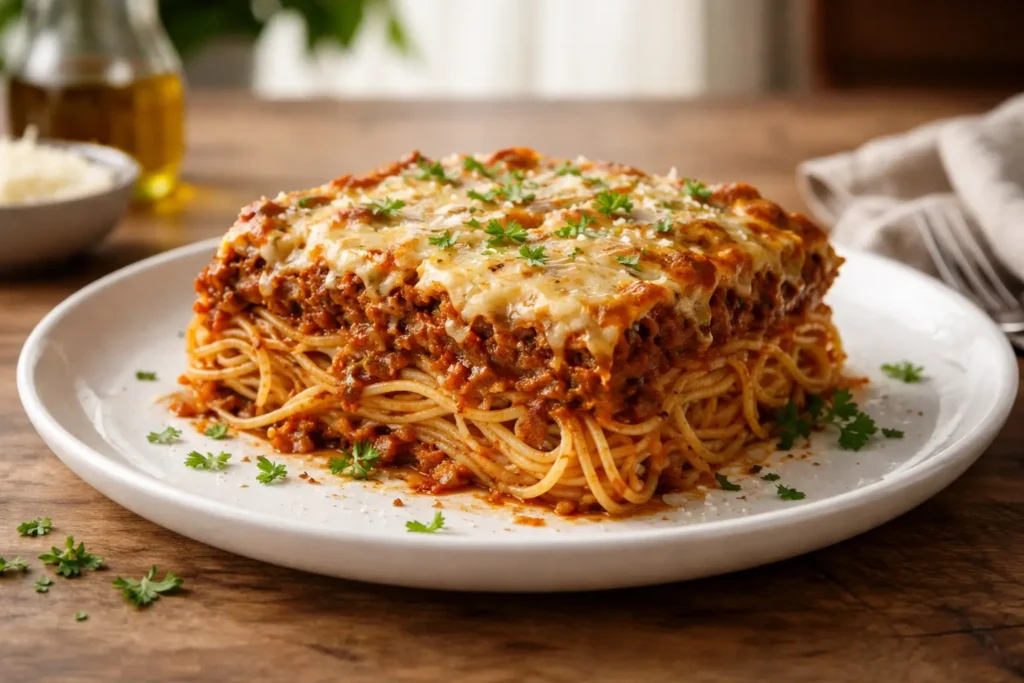
Spaghetti casserole works because it takes a familiar meal and adds structure, richness, and texture. Regular spaghetti is great, but baked spaghetti casserole feels heartier and more complete. The pasta absorbs more flavor, the cheese layer brings creaminess, and the baked top adds that irresistible golden finish.
It is also a very forgiving recipe. You do not need perfect technique or fancy ingredients. As long as the sauce is flavorful and the pasta is not overcooked, the casserole comes together beautifully. That is part of the reason it has stayed popular for so long in home kitchens.
Tips for the Best Spaghetti Casserole
Cook the pasta just to al dente
This is one of the most important details. Overcooked pasta can become too soft once baked.
Thicken the sauce slightly
A watery sauce can make the casserole loose instead of layered. A short simmer helps solve that.
Soften the cream cheese first
Softened cream cheese blends much more easily and gives the cheese layer a smoother texture.
Shred your own mozzarella if possible
Freshly shredded cheese melts more smoothly than pre-shredded cheese and gives a better top layer.
Let it rest before serving
Ten minutes of resting time makes a noticeable difference. The casserole slices better and holds together more neatly.
Easy Variations to Try
Spaghetti casserole is one of those recipes that is easy to adapt based on what you have.
Add Italian sausage
Replace part of the ground beef with Italian sausage for a deeper, more savory flavor.
Add vegetables
Mushrooms, spinach, bell peppers, or zucchini can be added to the sauce for extra texture and nutrition.
Make it extra cheesy
Add a little provolone or Monterey Jack along with the mozzarella for a richer topping.
Use ground turkey
Ground turkey works well if you want a lighter version. Just season it well since it is milder than beef.
Make it spicy
Hot Italian sausage or extra red pepper flakes can give the casserole a little more kick without changing the overall style.
What to Serve with Spaghetti Casserole
Because the casserole is rich and filling, simple sides work best.
Garlic bread
Caesar salad
Steamed green beans
Roasted broccoli
Cucumber tomato salad
A crisp green salad is especially helpful because it balances the richness of the pasta and cheese.
Storage and Reheating
Store leftover spaghetti casserole in an airtight container in the refrigerator for up to 4 days.
To reheat, cover and warm it in the oven at 325°F until hot, or microwave individual portions in short intervals. If it seems a little dry, add a spoonful of marinara sauce before reheating.
This casserole also freezes well. You can assemble it ahead, wrap it tightly, and freeze it before baking for up to 2 months. Thaw overnight in the refrigerator before baking.
Nutritional Facts
Calories: Approximately 540 per serving
Protein: 27g
Carbohydrates: 40g
Fat: 30g
Saturated Fat: 14g
Fiber: 3g
Sodium: Approximately 790mg
Conclusion
Spaghetti casserole is one of those dependable dinners that always feels worth making. It is hearty, cheesy, comforting, and practical enough for real life. The baked layers make it feel more substantial than basic spaghetti, while the creamy cheese filling gives it the kind of richness people remember.
This recipe is especially useful because it fits so many situations. It works for busy weeknights, meal prep, freezer dinners, and sharing with family or friends. If you want a pasta bake that is simple to make but still feels filling and special, spaghetti casserole is a recipe you will likely come back to again and again.
FAQs
What is the difference between baked spaghetti and spaghetti casserole?
They are very similar, but spaghetti casserole usually includes more distinct layers, often with a creamy cheese filling that makes it richer and more structured.
Can I make spaghetti casserole ahead of time?
Yes. You can assemble it up to a day ahead, cover it, and refrigerate it until ready to bake.
Can I freeze spaghetti casserole?
Yes. It freezes well before baking or after baking. Wrap it tightly and freeze for up to 2 months.
How do I keep spaghetti casserole from being dry?
Use enough sauce, do not overbake it, and keep the pasta slightly firm before assembling.
Can I use cottage cheese instead of ricotta?
Yes. Cottage cheese works well and still gives the casserole a creamy layer.
What cheese is best for spaghetti casserole?
Mozzarella is the classic topping, while Parmesan, cream cheese, and ricotta help build a rich, flavorful interior.