
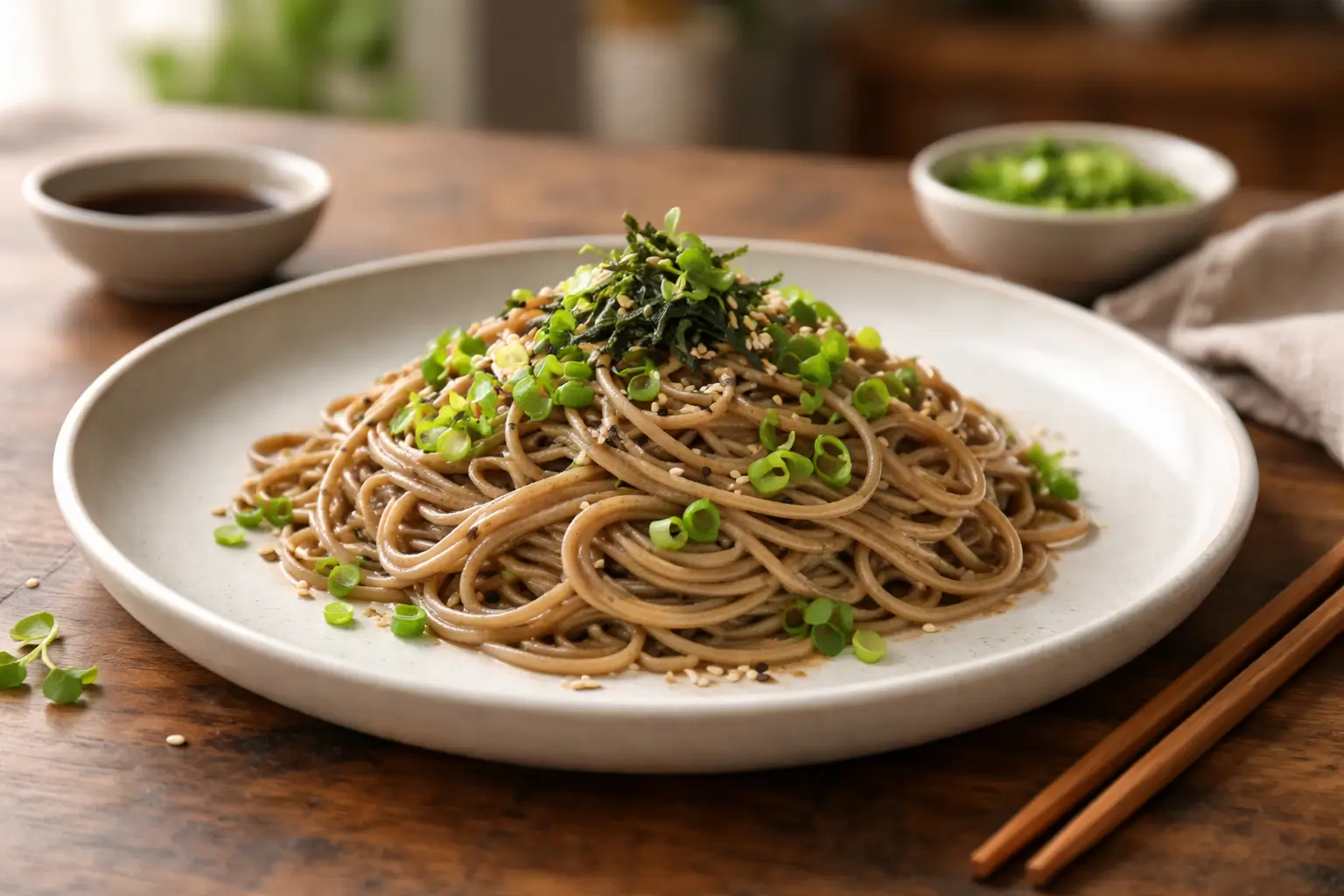
Soba Noodles Recipe are one of those ingredients that make a meal feel fresh, balanced, and satisfying without requiring much effort. They cook quickly, pair well with a wide range of flavors, and can be served warm or chilled depending on the season. If you want something lighter than a creamy pasta dish but still filling enough for lunch or dinner, soba noodles are a smart choice.
Made from buckwheat flour, soba noodles have a slightly earthy, nutty flavor that sets them apart from standard wheat noodles. That distinct taste works beautifully with simple sauces made from soy sauce, sesame oil, ginger, garlic, and a touch of sweetness. Add crisp vegetables, herbs, or a protein like chicken or tofu, and you have a meal that feels complete without becoming heavy.
What I like most about soba noodles is how adaptable they are. They can be dressed simply for a quick lunch, built into a more filling dinner, or served cold as a refreshing meal-prep option. This recipe keeps things simple and balanced, which is exactly where soba noodles shine.
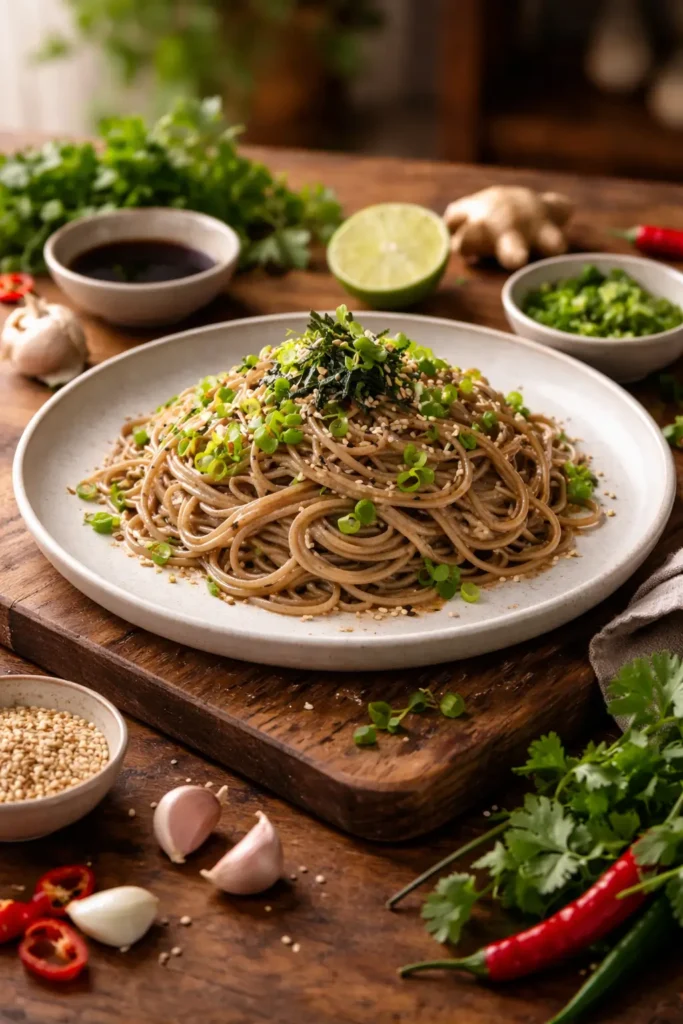
Why You’ll Love This Soba Noodles Recipe
This is the kind of recipe that earns a permanent place in your regular meal rotation.
Quick and easy to make
Light but still satisfying
Great warm, chilled, or at room temperature
Full of savory, nutty, fresh flavor
Easy to customize with vegetables or protein
Perfect for lunch, dinner, or meal prep
Equipment
Large pot
Colander
Mixing bowl
Small whisk or spoon
Knife
Cutting board
Measuring cups and spoons
Tongs or large serving spoon
Ingredients
8 ounces soba noodles
2 tablespoons soy sauce
1 tablespoon toasted sesame oil
1 tablespoon rice vinegar
1 tablespoon honey or maple syrup
1 teaspoon fresh ginger, grated
2 garlic cloves, minced
1 teaspoon chili crisp or red pepper flakes, optional
1 tablespoon peanut butter or tahini, optional for a creamier sauce
2 to 3 tablespoons warm water, as needed
2 green onions, sliced
1 cup shredded carrots
1 cup sliced cucumber
1 tablespoon toasted sesame seeds
1 tablespoon chopped cilantro or parsley, optional
Timing and Servings
Prep Time: 15 minutes
Cook Time: 5 minutes
Total Time: 20 minutes
Servings: 4
How to Make Soba Noodles
1. Cook the Soba Noodles
Bring a large pot of water to a boil. Add the soba noodles and cook according to the package directions, usually about 4 to 5 minutes. Stir gently once or twice so they do not clump.
Do not overcook them. Soba noodles are more delicate than many other noodles, and a minute too long can make them lose their pleasant texture.
2. Rinse the Noodles Well
Drain the noodles in a colander and rinse them thoroughly under cold running water. Toss them gently with your hands while rinsing to remove excess starch.
This step is especially important with soba noodles. It helps stop the cooking, improves the texture, and keeps the noodles from sticking together into one dense clump.
3. Make the Sauce
In a mixing bowl, whisk together the soy sauce, toasted sesame oil, rice vinegar, honey or maple syrup, ginger, garlic, and chili crisp if using. If you want a creamier finish, add the peanut butter or tahini. Stir in warm water, a little at a time, until the sauce is smooth and pourable.
You want the sauce to lightly coat the noodles, not sit in thick spoonfuls. A looser dressing works better here.
4. Toss the Noodles with the Sauce
Transfer the rinsed soba noodles to a large bowl. Pour the sauce over the noodles and toss gently with tongs until evenly coated.
Take a moment here to separate the noodles well. Good soba noodle dishes should feel light and loose, not sticky or heavy.
5. Add the Fresh Vegetables
Add the green onions, shredded carrots, sliced cucumber, sesame seeds, and cilantro or parsley if using. Toss again until everything is mixed through.
These fresh ingredients add crunch and color, which makes the dish feel more balanced and complete.
6. Taste and Adjust
Taste the noodles and adjust if needed. If you want more saltiness, add a little extra soy sauce. If you want more brightness, add a splash of rice vinegar. For more nuttiness, a few extra drops of sesame oil work well.
Serve chilled, at room temperature, or slightly cool.
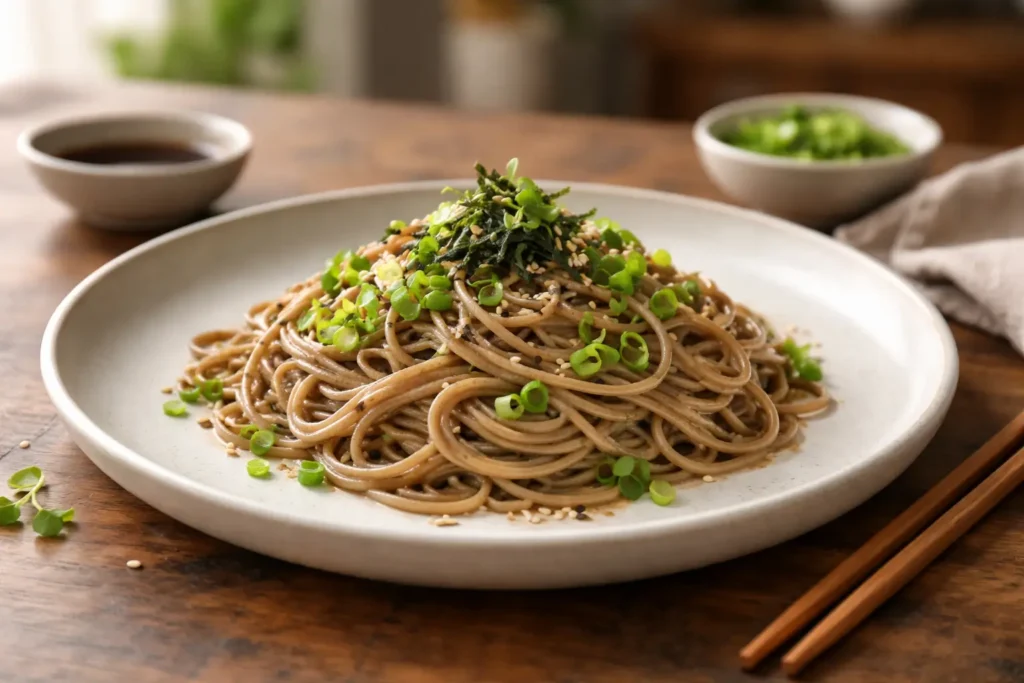
Tips for the Best Soba Noodles
Do Not Overcook the Noodles
This is the biggest difference-maker. Soba noodles should have a tender but springy texture. Once they get too soft, the whole dish feels flat.
Always Rinse After Cooking
Rinsing is not optional here. It removes starch, improves texture, and keeps the noodles from sticking. It also helps bring out the clean, slightly nutty flavor.
Use Toasted Sesame Oil for More Flavor
A small amount of toasted sesame oil adds a lot of depth. It gives the noodles their warm, nutty aroma without needing a heavy sauce.
Keep the Sauce Balanced
The best soba noodle dishes balance salty, tangy, lightly sweet, and nutty flavors. If the dish tastes dull, it usually needs one of those elements adjusted.
Add Crisp Vegetables Close to Serving Time
Fresh cucumber, carrots, cabbage, or green onions bring contrast to the soft noodles. Adding them near the end keeps them crisp.
Easy Variations
Soba noodles are easy to adapt based on what you want or what is already in your kitchen.
Add Chicken
Shredded rotisserie chicken or sliced grilled chicken makes this a more filling dinner while still keeping the dish light.
Add Tofu
Crispy pan-seared tofu works especially well with soba noodles and sesame-based sauces.
Add Shrimp
Cooked shrimp bring a fresh, slightly sweet flavor that pairs beautifully with ginger and soy.
Make It Spicy
Increase the chili crisp or add a spoonful of sriracha if you want more heat.
Add More Vegetables
Bell peppers, edamame, cabbage, spinach, or snap peas all work well here.
What to Serve with Soba Noodles
Soba noodles can easily stand on their own, but they also pair nicely with simple sides.
Edamame
Cucumber salad
Steamed dumplings
Miso soup
Grilled chicken
Pan-seared tofu
Stir-fried vegetables
If I am serving soba noodles for a light lunch, I usually keep them simple with cucumber and carrots. For dinner, I like to add tofu or chicken to make the meal more substantial.
Serving Suggestions
These noodles are especially useful because they fit into so many different meal styles.
A few serving ideas that work well are:
Chilled soba noodles for meal prep lunches
Soba noodles topped with grilled chicken
Sesame soba noodles with tofu and extra vegetables
Soba noodles served as a side dish with dumplings or soup
Nutritional Facts
Approximate per serving, depending on ingredients and brands used:
Calories: 280 to 360
Protein: 8 to 12 grams
Fat: 8 to 14 grams
Carbohydrates: 38 to 48 grams
Fiber: 2 to 4 grams
Sodium: Varies depending on soy sauce used
How to Store and Reheat
Soba noodles are excellent for make-ahead meals if stored properly.
Refrigerate
Store the noodles in an airtight container in the refrigerator for up to 3 days.
Refresh Before Serving
Cold soba noodles can dry out slightly as they sit. Toss them with a small splash of water, soy sauce, or sesame oil before serving to loosen them up.
Serve Cold or Cool
This recipe is best cold or at room temperature. If you want to warm it slightly, do so gently. Too much heat can make the noodles soft.
Conclusion
Soba noodles are one of the best examples of how a simple meal can still feel complete, flavorful, and satisfying. They cook quickly, pair well with fresh vegetables and light sauces, and work beautifully for both everyday lunches and easy dinners. The nutty flavor of the noodles gives the dish character, while the soy-sesame dressing keeps it balanced and easy to enjoy.
Once you get comfortable with the method, this is the kind of recipe you can adapt endlessly. Add protein, change the vegetables, make it spicier, or keep it simple. Either way, soba noodles are a practical and delicious option to have in your regular meal rotation.
FAQs
1. What are soba noodles made from?
Soba noodles are traditionally made from buckwheat flour, though many packaged versions also include some wheat flour for texture.
2. Are soba noodles served hot or cold?
They can be served both ways. This recipe works especially well chilled or at room temperature.
3. Why do you rinse soba noodles after cooking?
Rinsing removes excess starch, stops the cooking process, and improves the texture so the noodles stay light and separate.
4. Can I make soba noodles ahead of time?
Yes. They are great for meal prep and can be stored in the refrigerator for up to 3 days.
5. What protein goes well with soba noodles?
Chicken, tofu, shrimp, and edamame all pair very well with soba noodles.
6. Can I use another noodle instead of soba?
Yes, but the flavor and texture will change. Rice noodles, spaghetti, or ramen can work if needed.