
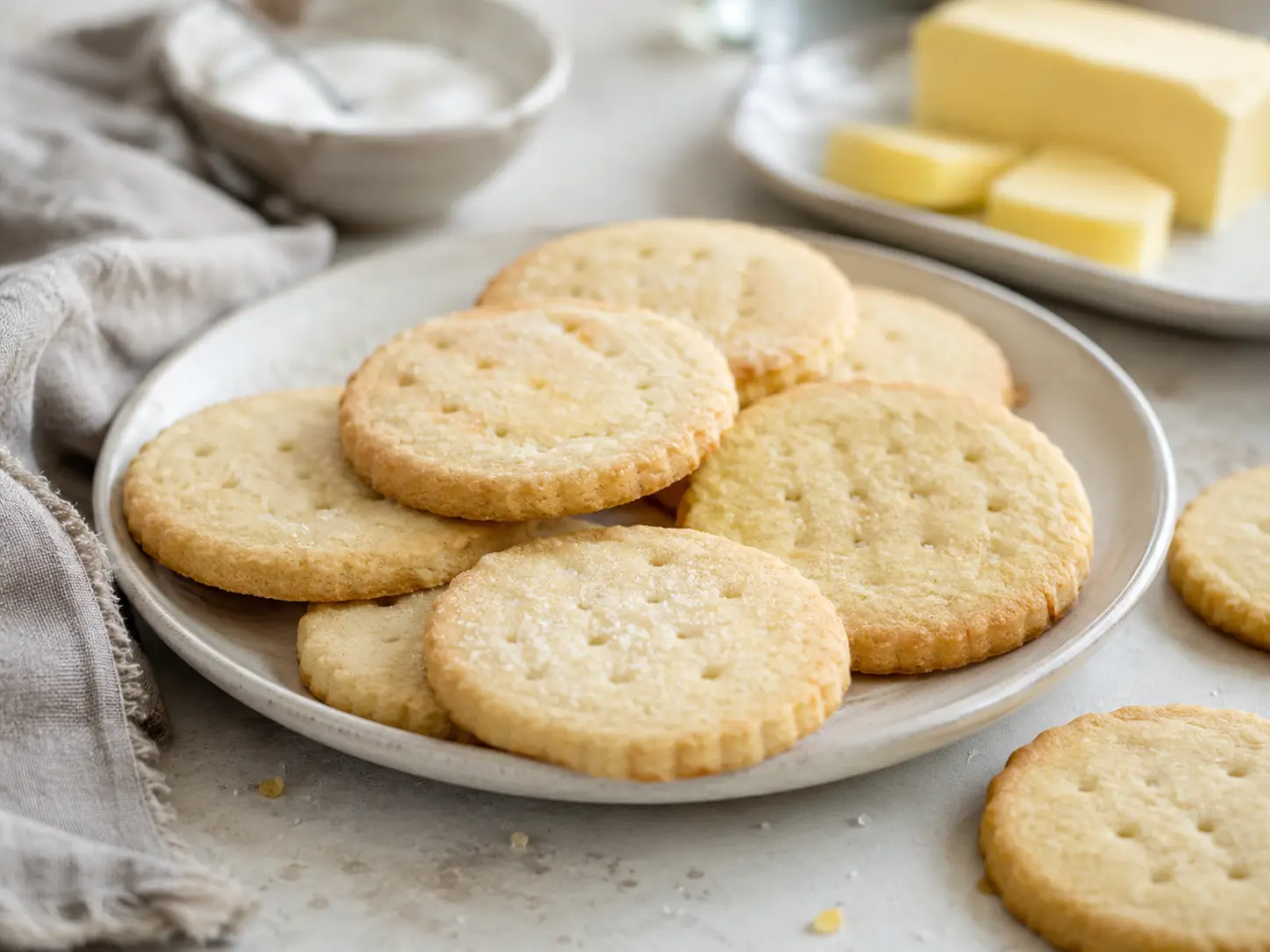
These Shortbread Cookies Recipe makes rich, buttery cookies with crisp edges and a tender, crumbly center. The dough uses only a few basic ingredients, allowing the flavor of the butter and vanilla to stand out.
Shortbread is a useful cookie for holiday trays, afternoon tea, homemade gifts, bake sales, or simple everyday baking. The dough can be shaped into rounds, cut into rectangles, or pressed into a baking pan depending on the look you prefer.
Why You Will Love This Recipe
-
Simple ingredients: The dough uses common baking staples.
-
Rich buttery flavor: Butter is the main flavor, so no complicated additions are needed.
-
Easy to prepare ahead: Both the dough and baked cookies freeze well.
-
Versatile: Dip them in chocolate, add citrus zest, or keep them plain.
Equipment Needed
-
Large mixing bowl
-
Medium mixing bowl
-
Electric hand mixer or stand mixer
-
Measuring cups and spoons
-
Rubber spatula
-
Whisk
-
Baking sheets
-
Parchment paper
-
Rolling pin
-
Cookie cutter or sharp knife
-
Plastic wrap
-
Fork or wooden skewer
-
Wire cooling rack
Ingredients List
For the Shortbread Dough
-
1 cup unsalted butter, softened
-
2/3 cup powdered sugar
-
1 teaspoon vanilla extract
-
1/4 teaspoon almond extract, optional
-
2 cups all-purpose flour
-
1/4 cup cornstarch
-
1/2 teaspoon salt
Optional Toppings
-
Coarse sugar
-
Melted semisweet or white chocolate
-
Chopped nuts
-
Colored sprinkles
-
Flaky sea salt
Timing & Servings
- Prep Time: 20 minutes
- Chilling Time: 30 minutes
- Cook Time: 14 minutes per batch
- Total Time: 1 hour 10 minutes
- Servings: 28 cookies
How to Make Shortbread Cookies Recipe Step by Step
Step 1: Mix the dry ingredients
- In a medium bowl, whisk together the flour, cornstarch, and salt.
- The cornstarch helps create the tender, crumbly texture associated with classic shortbread.
- Set the dry mixture aside while you prepare the butter.
Step 2: Cream the butter and sugar
- Place the softened butter and powdered sugar in a large mixing bowl.
- Beat with an electric mixer on medium speed for 2 to 3 minutes, until smooth and creamy.
- Add the vanilla and optional almond extract. Mix just until combined.
Step 3: Finish and chill the dough
- Add the dry ingredients to the butter mixture in two or three portions.
- Mix on low speed after each addition. Stop when the dough begins forming large, soft crumbs.
- Use a rubber spatula or your hands to gently bring the dough together. Do not knead it for a long time.
- Shape the dough into a flat disk, wrap it tightly, and refrigerate for 30 minutes.
Step 4: Roll and cut the cookies
- Preheat the oven to 325°F.
- Line two baking sheets with parchment paper.
- Place the chilled dough on a lightly floured surface and roll it to about 1/3 inch thick.
- Cut the dough with a 2-inch cookie cutter or slice it into small rectangles. Arrange the cookies about 1 inch apart on the baking sheets.
Step 5: Add the finishing details
- Use a fork or wooden skewer to make a few small holes in the top of each cookie.
- This traditional step helps steam escape and can reduce uneven bubbling.
- Sprinkle the tops lightly with coarse sugar if desired.
- If the shaped dough feels soft, refrigerate the baking sheet for 10 minutes before baking.
Step 6: Bake the cookies
- Bake one sheet at a time for 12 to 15 minutes.
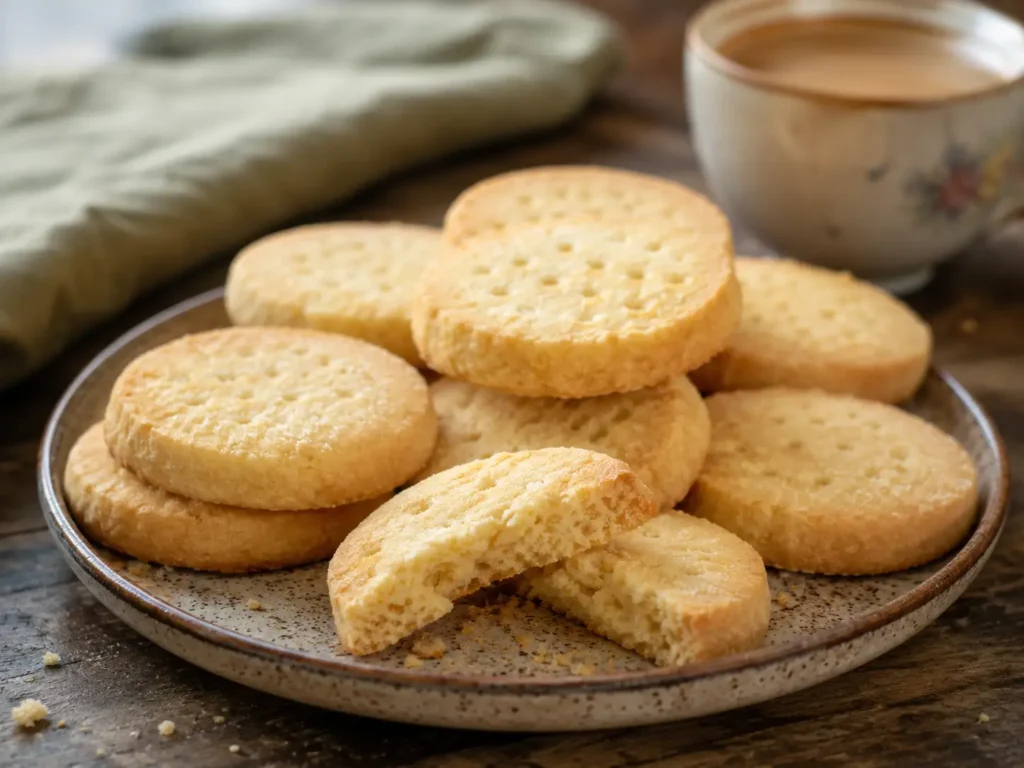
- The tops should remain pale, while the bottom edges should look lightly golden.
- Avoid baking until the entire cookie is brown. Shortbread continues firming as it cools.
Step 7: Cool and decorate
- Let the cookies cool on the baking sheet for 5 minutes.
- Transfer them carefully to a wire rack and allow them to cool completely.
- Once cool, serve them plain or dip one side in melted chocolate. Add nuts, sprinkles, or flaky salt before the chocolate sets.
Tips for the Best Shortbread Cookies Recipe
Choose good-quality butter
Butter provides most of the flavor in shortbread.
Use unsalted butter so you can control the amount of salt in the dough.
Soften the butter properly
The butter should feel soft when gently pressed but should not look melted or greasy.
Butter that is too warm can make the cookies spread and lose their shape.
Use powdered sugar
Powdered sugar dissolves easily into the butter and creates a finer, more tender texture than granulated sugar.
It also helps the cookies remain smooth rather than grainy.
Include the cornstarch
Cornstarch reduces the amount of gluten in the dough and helps create a delicate crumb.
Do not replace it with more flour unless necessary, as the cookies may become firmer.
Measure the flour correctly
Too much flour is one of the main causes of dry shortbread.
Spoon the flour into the measuring cup and level it with a knife rather than scooping directly from the container.
Avoid overmixing
Mixing the dough too much develops gluten and can make the cookies tough.
Stop mixing as soon as the dough holds together.
Chill the dough
Chilling firms the butter and makes the dough easier to roll.
It also helps the cut cookies keep their shape while baking.
Roll the dough evenly
Cookies of different thicknesses will not finish baking at the same time.
Aim for an even thickness of about 1/3 inch.
Keep the cookies pale
Shortbread should have a light color with only slight browning around the bottom edges.
A dark golden cookie may be dry and harder than intended.
Common Mistakes to Avoid
Do not use melted butter.
Avoid adding too much flour to the work surface while rolling.
Do not knead the dough as you would bread dough.
Avoid rolling the cookies too thin, as they may become hard or break easily.
Do not skip chilling when the dough feels soft.
Avoid baking until the tops are deeply golden.
Do not move the cookies immediately after baking because they are fragile while hot.
Variations to Try
Chocolate-Dipped Shortbread
Melt 6 ounces of semisweet, dark, or white chocolate.
Dip one end of each cooled cookie into the chocolate and place it on parchment paper until set.
Lemon Shortbread
Add 1 tablespoon of finely grated lemon zest to the butter mixture.
A small amount of lemon extract can also be added for stronger flavor.
Orange Shortbread
Use orange zest instead of lemon zest.
Dip the cooled cookies in dark chocolate for a classic citrus and chocolate combination.
Almond Shortbread
Add the optional almond extract and 1/2 cup of finely chopped almonds.
Top the cookies with sliced almonds before baking if desired.
Pecan Shortbread
Fold 3/4 cup of finely chopped toasted pecans into the finished dough.
Chill the dough well before slicing or rolling.
Chocolate Chip Shortbread
Add 3/4 cup of mini chocolate chips.
Mini chips distribute more evenly and make the dough easier to cut.
Lavender Shortbread
Add 1 teaspoon of culinary lavender, finely crushed.
Use a small amount so the flavor does not become too strong.
Cinnamon Shortbread
Add 1 teaspoon of ground cinnamon to the dry ingredients.
Sprinkle the cookies with cinnamon sugar before baking.
Sprinkle Shortbread
Fold 1/3 cup of colored jimmies into the dough.
This variation works well for birthdays and holiday cookie trays.
Gluten-Free Version
Use a cup-for-cup gluten-free flour blend designed for baking.
The dough may be slightly more delicate, so chill it thoroughly before cutting.
Dairy-Free Version
Replace the butter with a firm plant-based baking butter.
Avoid soft tub spreads because their higher water content may cause spreading.
Serving Suggestions
- Serve shortbread cookies with coffee, black tea, green tea, hot chocolate, or cold milk.
- They are a natural addition to holiday cookie trays with sugar cookies, gingerbread, chocolate crinkles, and peanut butter blossoms.
- For afternoon tea, arrange the cookies with scones, fresh berries, small sandwiches, and lemon curd.
- Shortbread also pairs well with vanilla ice cream, chocolate mousse, pudding, or fresh fruit.
- You can crumble the cookies over yogurt or ice cream for added texture.
- For homemade gifts, place cooled cookies in a decorative tin or bakery box with parchment paper between the layers.
Make-Ahead, Storage, and Reheating
Make-Ahead Dough
The shortbread dough can be prepared up to 3 days ahead.
Wrap it tightly in plastic wrap and store it in the refrigerator.
Let refrigerated dough sit at room temperature for 10 to 15 minutes if it is too firm to roll.
Room-Temperature Storage
Allow the cookies to cool completely.
Store them in an airtight container at room temperature for up to 10 days.
Place parchment paper between layers, especially if the cookies are chocolate-dipped.
Keep the container in a cool, dry place away from sunlight.
Refrigerator Storage
Shortbread does not need refrigeration.
If your kitchen is very warm or the cookies have a soft chocolate coating, refrigerate them in an airtight container for up to 2 weeks.
Let them return to room temperature before serving.
Freezing Cookie Dough
Wrap the dough disk tightly in plastic wrap and place it in a freezer-safe bag.
Freeze for up to 3 months.
Thaw the dough overnight in the refrigerator before rolling and baking.
You can also freeze shaped, unbaked cookies on a baking sheet. Once firm, transfer them to a freezer bag and bake directly from frozen, adding 1 to 2 minutes.
Freezing Baked Cookies
Place completely cooled cookies in a freezer-safe container with parchment paper between the layers.
Freeze for up to 3 months.
Thaw them at room temperature inside the closed container to help prevent condensation.
Reheating
Shortbread cookies do not need to be reheated.
To refresh refrigerated cookies, let them sit at room temperature for about 20 minutes before serving.
Nutritional Facts
- Calories: 135
- Fat: 8g
- Carbs: 15g
- Protein: 1g
- Sugar: 5g
- Sodium: 45mg
Shortbread Cookies Recipe
Equipment
- Large mixing bowl
- Medium mixing bowl
- Electric hand mixer or stand mixer
- Measuring Cups and Spoons
- Rubber spatula
- Whisk
- Baking sheets
- Parchment paper
- Rolling Pin
- Cookie cutter or sharp knife
- Plastic wrap
- Fork or wooden skewer
- Wire cooling rack
Ingredients
For the Shortbread Dough
- 1 cup unsalted butter softened
- 2/3 cup powdered sugar
- 1 teaspoon vanilla extract
- 1/4 teaspoon almond extract optional
- 2 cups all-purpose flour
- 1/4 cup cornstarch
- 1/2 teaspoon salt
Optional Toppings
- Coarse sugar
- Melted semisweet or white chocolate
- Chopped nuts
- Colored sprinkles
- Flaky sea salt
Instructions
Step 1: Mix the dry ingredients
- In a medium bowl, whisk together the flour, cornstarch, and salt.
- The cornstarch helps create the tender, crumbly texture associated with classic shortbread.
- Set the dry mixture aside while you prepare the butter.
Step 2: Cream the butter and sugar
- Place the softened butter and powdered sugar in a large mixing bowl.
- Beat with an electric mixer on medium speed for 2 to 3 minutes, until smooth and creamy.
- Add the vanilla and optional almond extract. Mix just until combined.
Step 3: Finish and chill the dough
- Add the dry ingredients to the butter mixture in two or three portions.
- Mix on low speed after each addition. Stop when the dough begins forming large, soft crumbs.
- Use a rubber spatula or your hands to gently bring the dough together. Do not knead it for a long time.
- Shape the dough into a flat disk, wrap it tightly, and refrigerate for 30 minutes.
Step 4: Roll and cut the cookies
- Preheat the oven to 325°F.
- Line two baking sheets with parchment paper.
- Place the chilled dough on a lightly floured surface and roll it to about 1/3 inch thick.
- Cut the dough with a 2-inch cookie cutter or slice it into small rectangles. Arrange the cookies about 1 inch apart on the baking sheets.
Step 5: Add the finishing details
- Use a fork or wooden skewer to make a few small holes in the top of each cookie.
- This traditional step helps steam escape and can reduce uneven bubbling.
- Sprinkle the tops lightly with coarse sugar if desired.
- If the shaped dough feels soft, refrigerate the baking sheet for 10 minutes before baking.
Step 6: Bake the cookies
- Bake one sheet at a time for 12 to 15 minutes.
- The tops should remain pale, while the bottom edges should look lightly golden.
- Avoid baking until the entire cookie is brown. Shortbread continues firming as it cools.
Step 7: Cool and decorate
- Let the cookies cool on the baking sheet for 5 minutes.
- Transfer them carefully to a wire rack and allow them to cool completely.
- Once cool, serve them plain or dip one side in melted chocolate. Add nuts, sprinkles, or flaky salt before the chocolate sets.
FAQs
Why did my shortbread cookies spread?
The butter may have been too warm, or the shaped dough may not have been chilled long enough. Refrigerate soft cookies before baking.
Why is my shortbread dough crumbly?
Shortbread dough naturally looks crumbly before it comes together. Press it gently with your hands. If it remains extremely dry, add 1 teaspoon of milk.
Can I make shortbread without cornstarch?
Yes. Replace the cornstarch with an equal amount of flour. The cookies will still work but may have a slightly firmer texture.
How do I know when shortbread is done?
The tops should remain pale, and the bottom edges should be lightly golden. The cookies will feel soft while hot and firm as they cool.
Conclusion
These Shortbread Cookies Recipe makes tender, buttery cookies with a crisp bite and a simple vanilla flavor. The dough is easy to customize and can be prepared ahead for holidays, gifts, or everyday baking.