

Miso Ramen Recipe is one of those bowls of comfort food that feels deeply satisfying from the very first bite. It has a rich, savory broth, chewy noodles, and the kind of layered flavor that makes it taste like much more than a quick soup. When made well, miso ramen is warm, balanced, and full of depth without being overly complicated.
What makes this recipe especially worth keeping is how practical it is for home cooking. You do not need to spend all day building a restaurant-style broth to make a really good bowl. With the right combination of miso paste, broth, aromatics, and toppings, you can create a ramen that feels homemade, flavorful, and comforting in a very real way.
I like miso ramen because it gives you a lot of flavor for a relatively manageable amount of effort. The miso brings umami depth, the broth stays rich and warming, and the toppings let you customize each bowl depending on what you have. If you want a noodle soup that feels cozy, satisfying, and genuinely worth making from scratch, miso ramen is a strong choice.
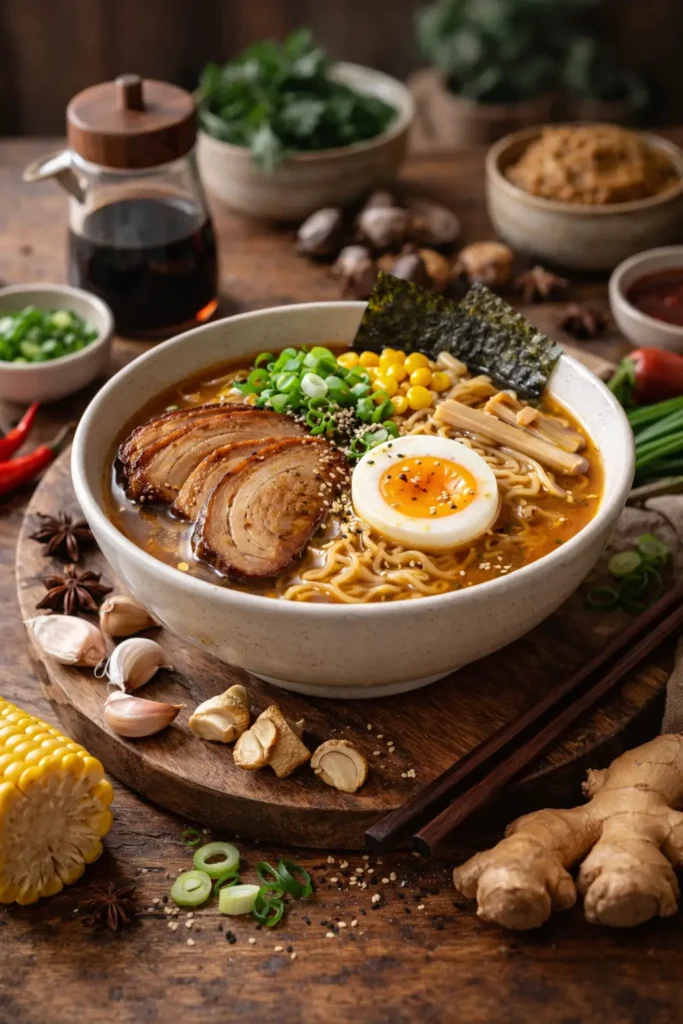
Why You’ll Love This Miso Ramen
There are plenty of noodle soup recipes out there, but miso ramen stands out for a few very good reasons.
Rich, savory broth with deep umami flavor
Comforting and satisfying without being too heavy
Easy to customize with toppings and protein
Great for lunch or dinner
More flavorful than basic instant ramen
Feels restaurant-inspired but doable at home
Equipment
Large pot or Dutch oven
Medium saucepan for eggs, optional
Fine whisk or spoon
Ladle
Knife
Cutting board
Measuring cups and spoons
Strainer or slotted spoon
Ingredients
For the Broth
1 tablespoon sesame oil or neutral oil
1 small onion, finely chopped
3 garlic cloves, minced
1 tablespoon fresh ginger, grated
4 cups chicken broth or vegetable broth
2 tablespoons white miso paste
1 tablespoon red miso paste
1 tablespoon soy sauce
1 teaspoon rice vinegar
1 teaspoon chili paste or chili oil, optional
1/2 cup whole milk or unsweetened coconut milk, optional for a slightly creamier broth
For the Noodles and Toppings
2 packs ramen noodles
2 soft-boiled eggs, halved, optional
1 cup sliced mushrooms
1 cup baby spinach
1/2 cup corn kernels
2 green onions, sliced
1 tablespoon toasted sesame seeds
Cooked chicken, tofu, or shredded pork, optional
Timing and Servings
Prep Time: 15 minutes
Cook Time: 20 minutes
Total Time: 35 minutes
Servings: 2 to 3
How to Make Miso Ramen
1. Start the Aromatics
Heat the sesame oil in a large pot over medium heat. Add the chopped onion and cook for 3 to 4 minutes until softened. Stir in the garlic and ginger and cook for about 30 seconds, just until fragrant.
This is where the broth starts building flavor. You want the aromatics softened and savory, not browned too hard.
2. Add the Broth
Pour in the chicken or vegetable broth and bring it to a gentle simmer. Let it cook for about 5 minutes so the onion, garlic, and ginger have time to infuse the broth.
This short simmer makes a noticeable difference. It helps the broth taste more developed before the miso even goes in.
3. Mix in the Miso
In a small bowl, whisk the white miso and red miso with a few spoonfuls of hot broth until smooth. Then stir that mixture back into the pot.
This step matters because miso blends more smoothly when loosened first. If you add it straight into the pot, it can stay lumpy.
4. Add the Seasoning
Stir in the soy sauce, rice vinegar, and chili paste or chili oil if using. If you want a slightly creamier broth, add the milk or coconut milk now and stir gently.
Let the broth warm through over low heat. Do not boil it hard after the miso is added. Gentle heat keeps the flavor rounder and prevents the broth from tasting harsh.
5. Cook the Mushrooms and Corn
Add the mushrooms and corn to the broth and let them simmer for about 3 to 4 minutes until the mushrooms soften.
These vegetables add sweetness, texture, and substance without making the soup feel heavy.
6. Cook the Noodles
In a separate pot, cook the ramen noodles according to the package directions. Drain them once tender.
Cooking the noodles separately helps keep the broth clearer and prevents the noodles from soaking up too much liquid before serving.
7. Wilt the Spinach
Stir the spinach into the hot broth just before serving. It only needs about 30 seconds to wilt.
This keeps the spinach bright and tender instead of overcooked.
8. Assemble the Bowls
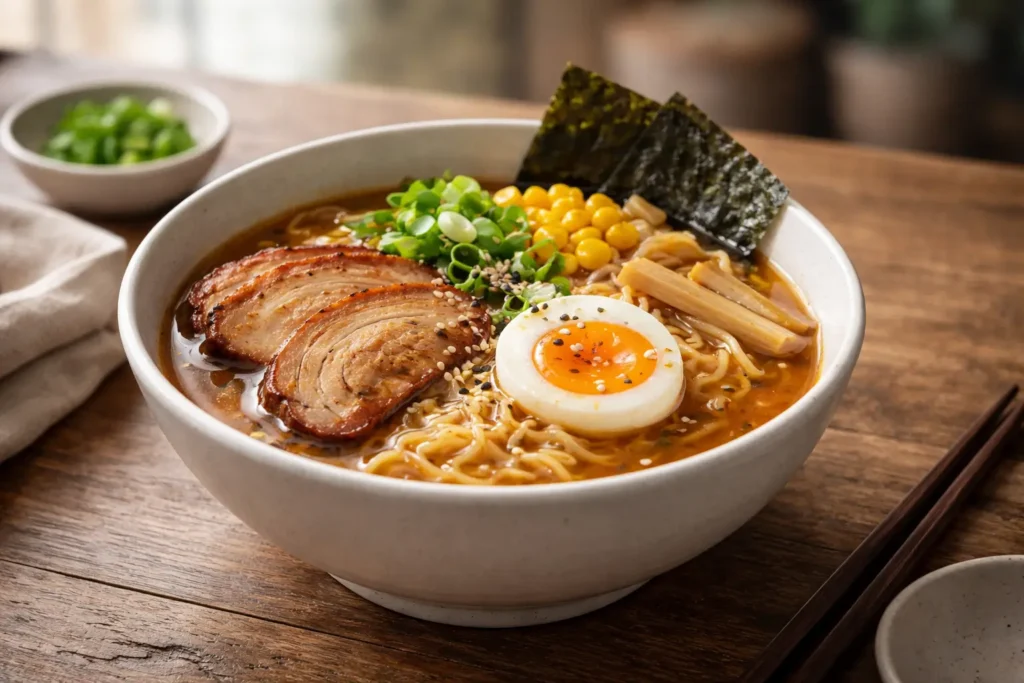
Divide the cooked noodles between serving bowls. Ladle the hot miso broth and vegetables over the noodles. Top with soft-boiled eggs, green onions, sesame seeds, and any cooked chicken, tofu, or pork if using.
Serve right away while everything is hot and fresh.
Tips for the Best Miso Ramen
Do Not Boil the Miso
Once miso goes into the broth, keep the heat gentle. High boiling can flatten some of its flavor and make the broth taste rougher.
Use More Than One Type of Miso if Possible
A mix of white miso and red miso gives you better balance. White miso is milder and slightly sweeter, while red miso adds deeper, saltier flavor.
Cook the Noodles Separately
This is a simple step that improves texture. It keeps the noodles springy and stops them from making the broth too starchy.
Taste the Broth Before Serving
Miso pastes vary in saltiness. Taste the broth before serving and adjust with a little more soy sauce, broth, or water if needed.
Add Toppings That Contrast the Broth
Soft eggs, green onions, sesame seeds, spinach, mushrooms, and corn all work well because they add texture and freshness to the rich broth.
Easy Variations
Miso ramen is one of the easiest noodle bowls to customize.
Add Chicken
Sliced cooked chicken breast or shredded rotisserie chicken makes the bowl more filling and pairs well with the miso broth.
Add Tofu
Pan-seared or cubed tofu is an excellent option if you want a vegetarian-friendly protein.
Make It Spicier
Add extra chili oil, chili paste, or a pinch of red pepper flakes if you want more heat.
Add More Vegetables
Bok choy, bean sprouts, shredded carrots, or napa cabbage all work very well here.
Make It Richer
A spoonful of tahini or a little more milk can make the broth feel richer and slightly creamier.
What to Serve with Miso Ramen
Miso ramen is often a full meal on its own, but a few simple sides can work nicely.
Gyoza or dumplings
Cucumber salad
Edamame
Seaweed salad
Steamed vegetables
Crispy tofu bites
If I am serving miso ramen for dinner, I usually keep the side light so the broth and noodles remain the focus.
Serving Suggestions
Miso ramen works in several different ways depending on the kind of meal you want.
For a Cozy Dinner
Serve it in deep bowls with eggs and a protein topping for a full, warming meal.
For a Quick Lunch
Keep the broth simple and use spinach, mushrooms, and green onions for a lighter bowl.
For Meal Prep
Prep the broth and toppings ahead, then cook the noodles fresh when you are ready to eat.
For a More Loaded Bowl
Add extra vegetables, protein, and sesame seeds for a restaurant-style ramen experience at home.
Nutritional Facts
Approximate per serving, depending on broth, toppings, and protein used:
Calories: 380 to 520
Protein: 12 to 24 grams
Fat: 12 to 22 grams
Carbohydrates: 42 to 55 grams
Fiber: 3 to 5 grams
Sodium: Varies depending on broth, soy sauce, and miso used
How to Store and Reheat
Miso ramen stores best when the noodles and broth are kept separate.
Refrigerate
Store the broth in an airtight container in the refrigerator for up to 3 days. Keep noodles and toppings separate if possible.
Reheat Gently
Warm the broth over low to medium heat until hot. Avoid boiling it too hard.
Assemble Fresh
For the best texture, add freshly cooked or separately stored noodles to the hot broth just before serving.
Conclusion
Miso ramen is one of those recipes that proves a homemade bowl of soup can feel deeply comforting and still full of character. The broth is rich and savory, the noodles make it satisfying, and the toppings let you shape the bowl around whatever sounds good that day.
It is also a recipe that becomes easier every time you make it. Once you understand how the miso, broth, noodles, and toppings work together, it quickly turns into one of those reliable meals you can build with confidence. That is exactly what makes it worth keeping in your regular rotation.
FAQs
1. What does miso ramen taste like?
Miso ramen has a savory, rich, slightly salty broth with deep umami flavor. It often tastes warm, balanced, and comforting.
2. What kind of miso is best for ramen?
White miso is milder and slightly sweeter, while red miso is deeper and saltier. A mix of both works especially well.
3. Can I make miso ramen vegetarian?
Yes. Use vegetable broth and add tofu or extra vegetables for a vegetarian version.
4. Do I need to cook ramen noodles separately?
Yes, that gives the best texture and helps keep the broth from turning too starchy.
5. What toppings go well with miso ramen?
Soft-boiled eggs, green onions, mushrooms, spinach, corn, sesame seeds, chicken, and tofu all work very well.
6. Can I make miso ramen ahead of time?
Yes, but store the broth and noodles separately for the best texture when reheating.