
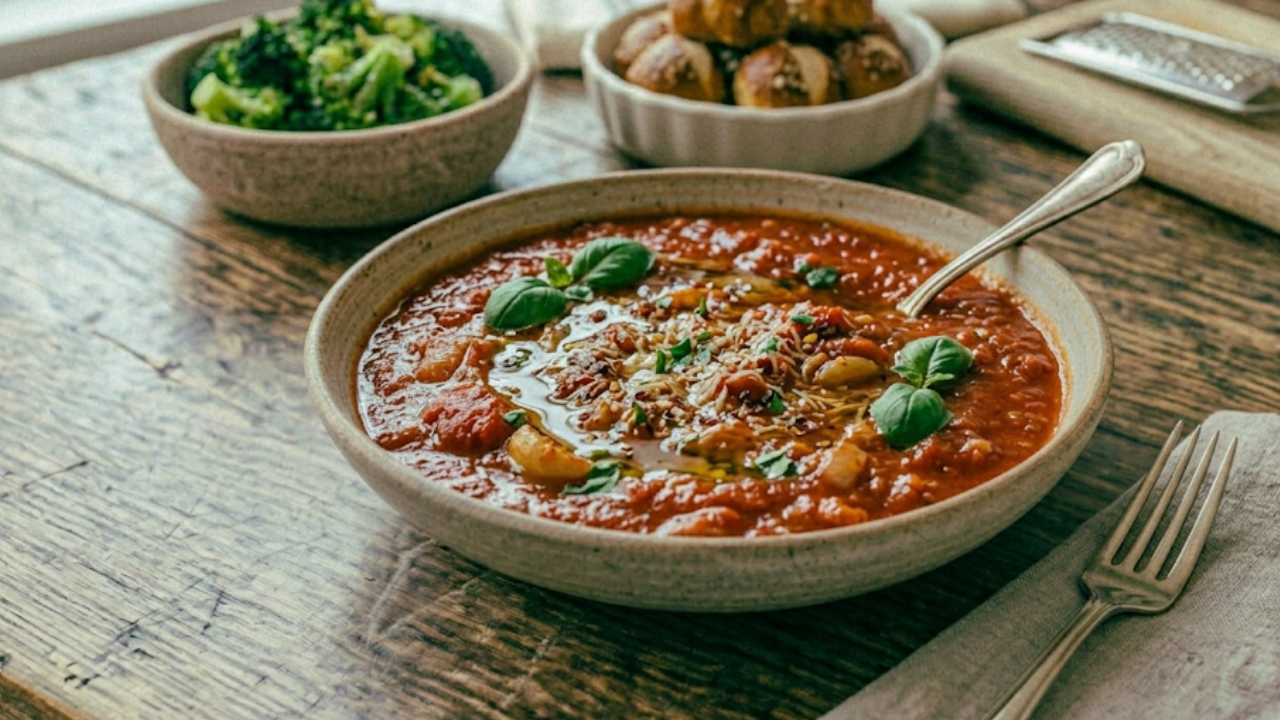
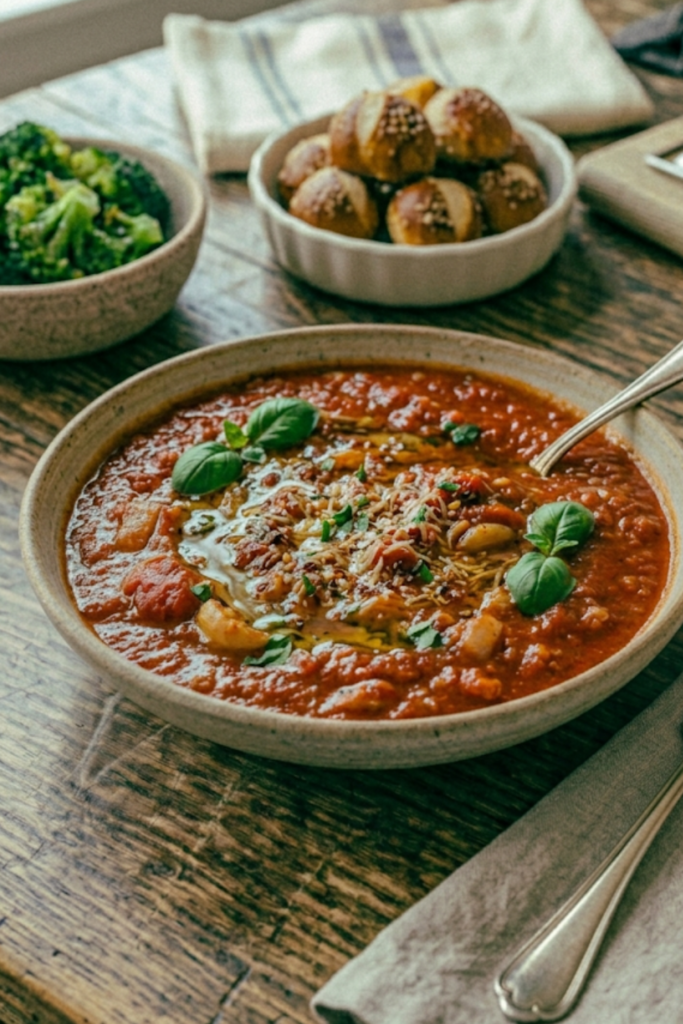
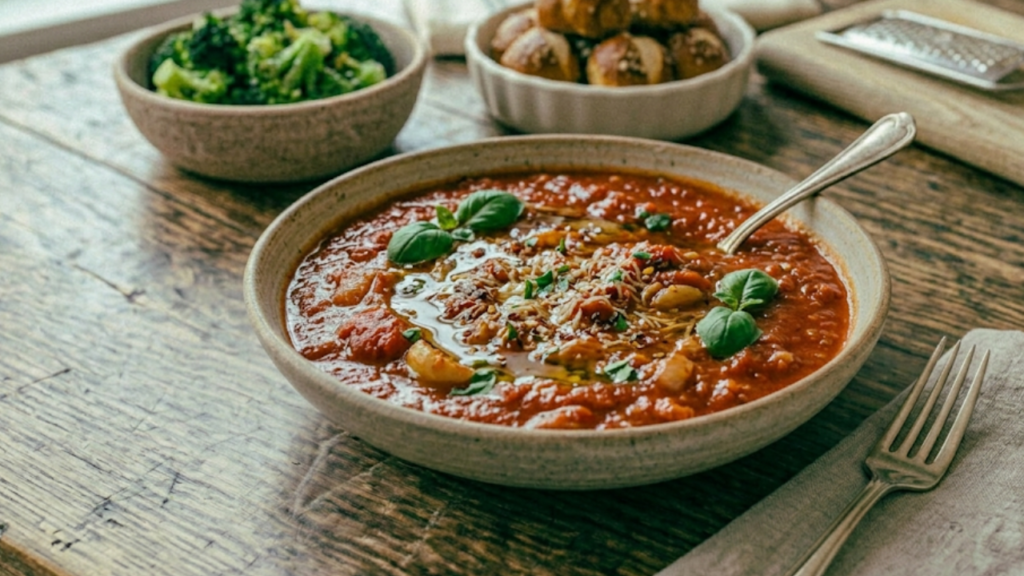
Marinara sauce is a cornerstone of Italian cuisine, renowned for its rich, tomato-forward flavor and aromatic herbs. Whether draped over pasta, used as a pizza base, or served as a dipping sauce, this versatile sauce elevates any dish. The beauty of marinara lies in its simplicity: ripe tomatoes, garlic, olive oil, and fresh herbs come together to create a sauce that’s both comforting and flavorful.
Making marinara sauce from scratch is easier than you might think, and it allows you to control the freshness, seasoning, and consistency, resulting in a sauce that outshines store-bought alternatives.
Why This Marinara Sauce Recipe Works
Fresh ingredients – Uses ripe tomatoes, fresh garlic, and herbs for vibrant flavor.
Simple steps – Minimal prep and easy cooking process.
Customizable – Adjust herbs, spice, or thickness to taste.
Versatile – Perfect for pasta, pizza, meatballs, or as a dipping sauce.
Freezer-friendly – Makes a convenient batch for quick meals.
With this recipe, you’ll enjoy a rich and balanced sauce that tastes like it simmered all day, even if it only takes 30–40 minutes.
Equipment
Medium or large saucepan
Wooden spoon or silicone spatula
Chef’s knife
Cutting board
Measuring spoons and cups
Blender or immersion blender (optional for smooth sauce)
Ingredients
2 tablespoons extra-virgin olive oil
4 cloves garlic, minced
1 medium onion, finely chopped
2 cans (28 oz each) whole peeled tomatoes
1 teaspoon salt (adjust to taste)
½ teaspoon black pepper
1 teaspoon sugar (optional, balances acidity)
1 teaspoon dried oregano
1 teaspoon dried basil (or 2 tablespoons fresh, chopped)
½ teaspoon red pepper flakes (optional, for heat)
2 tablespoons tomato paste (optional, for richness)
Fresh basil leaves for garnish
Timing and Servings
Prep Time: 10 minutes
Cook Time: 30–40 minutes
Total Time: 40–50 minutes
Servings: 6–8
Calories per serving: ~120 kcal
How to Make Marinara Sauce
Step 1: Sauté Aromatics
Heat olive oil in a medium saucepan over medium heat. Add minced garlic and chopped onion. Sauté until fragrant and translucent, about 3–4 minutes. Be careful not to burn the garlic, as it can turn bitter.
Step 2: Add Tomatoes
Crush the canned tomatoes with your hands or a spoon and add them to the pan along with their juices. For a smoother sauce, use a blender or immersion blender after cooking.
Step 3: Season and Simmer
Add salt, pepper, sugar, oregano, basil, and optional red pepper flakes and tomato paste. Stir well to combine. Bring the sauce to a gentle simmer over medium-low heat.
Step 4: Cook to Perfection
Let the sauce simmer uncovered for 25–30 minutes, stirring occasionally. This allows the flavors to meld, the sauce to thicken, and excess water to evaporate. Taste and adjust seasoning as needed.
Step 5: Blend (Optional)
For a silky smooth marinara, use an immersion blender directly in the saucepan, or transfer the sauce to a blender and puree until desired consistency is reached.
Step 6: Serve or Store
Serve hot over pasta, pizza, or meatballs. Garnish with fresh basil for added color and flavor.
Tips for the Perfect Marinara
Use high-quality canned tomatoes for deep flavor; San Marzano is ideal.
Simmer on low heat for a longer time for richer flavor.
Fresh herbs can be added at the end of cooking to preserve bright flavor.
Avoid overcooking garlic at the start to prevent bitterness.
Add a pinch of sugar only if tomatoes are too acidic.
Variations
Spicy Marinara: Add extra red pepper flakes or chopped chili for heat.
Creamy Marinara: Stir in ¼ cup heavy cream or coconut cream at the end.
Roasted Tomato Marinara: Roast tomatoes and garlic before adding to the sauce for depth.
Chunky Marinara: Skip blending and leave tomato pieces for a rustic texture.
Storage and Freezing
Refrigerator: Store in an airtight container for up to 5–6 days.
Freezer: Freeze in freezer-safe containers or bags for up to 3 months. Thaw overnight in the refrigerator.
Reheat gently on low heat to maintain flavor and texture.
Nutritional Facts (Per Serving)
Calories: 120 kcal
Protein: 3 g
Carbs: 18 g
Fat: 5 g
Fiber: 4 g
Sugar: 10 g
Sodium: 400 mg
Common Mistakes to Avoid
Skipping the sautéing step – onion and garlic add depth.
Boiling instead of simmering – can break down the tomatoes and reduce flavor.
Adding too much salt at the beginning – taste after simmering and adjust gradually.
Using low-quality canned tomatoes – impacts flavor significantly.
Conclusion
This marinara sauce recipe is a reliable, flavorful foundation for countless Italian dishes. Simple, authentic ingredients combined with proper technique result in a sauce that’s rich, balanced, and versatile. Homemade marinara elevates any pasta, pizza, or protein dish, while providing a fresh, vibrant alternative to store-bought sauces. By following these steps and tips, you can create a restaurant-quality marinara sauce right in your kitchen, perfect for family dinners or special occasions.
FAQs
1. Can I use fresh tomatoes instead of canned? Yes, use about 3–4 pounds of fresh, ripe tomatoes. Blanch, peel, and crush before cooking.
2. How long can I store homemade marinara? Refrigerate for 5–6 days, or freeze for up to 3 months.
3. Can I make marinara sauce in advance? Absolutely! It tastes even better the next day as flavors meld.
4. Can I make it spicy? Yes, add red pepper flakes or chopped chili peppers while simmering.
5. Can I make marinara sauce without onion or garlic? Yes, but the flavor will be milder. You can substitute with shallots or garlic powder if desired.
6. Can I thicken the sauce without tomato paste? Simmer longer uncovered or mash some tomato chunks to thicken naturally.