

A Hummus Bowl Recipe is one of those meals that looks vibrant, tastes fresh, and still manages to feel genuinely satisfying. It is built around creamy hummus, then layered with vegetables, grains, greens, and toppings that add color, crunch, and plenty of flavor. The result is a bowl that feels wholesome without being boring and filling without being too heavy.
What makes a hummus bowl especially useful is how flexible it is. You can keep it simple for a quick lunch, build it into a bigger dinner with grains and protein, or use it as a meal-prep option that actually stays interesting. A good hummus bowl should have contrast in every bite—smooth hummus, crisp vegetables, something hearty like rice or quinoa, and a bright dressing or topping to tie it all together.
I like recipes like this because they are practical and feel good to eat. They are colorful, easy to customize, and built from ingredients that are easy to mix and match depending on what you already have. If you want a meal that is healthy, flavorful, and easy to repeat, a hummus bowl is a great one to keep in your regular rotation.
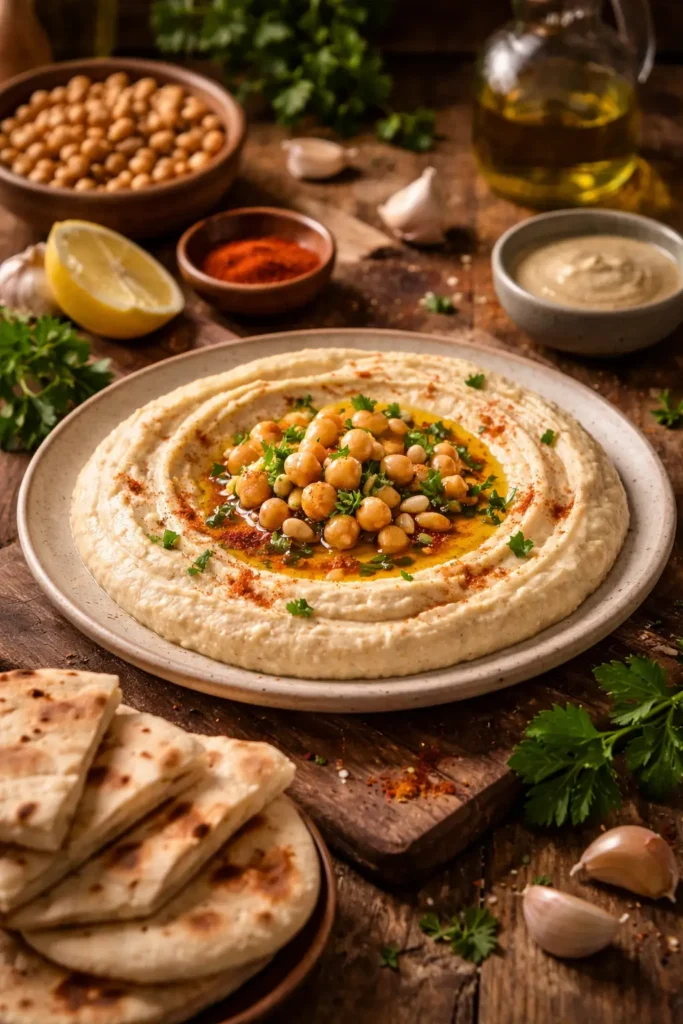
Why You’ll Love This Hummus Bowl
There are plenty of grain bowls and salad bowls out there, but a hummus bowl has its own appeal.
Quick and easy to assemble
Fresh, colorful, and satisfying
Great for lunch, dinner, or meal prep
Easy to customize with vegetables, grains, and protein
Naturally full of texture and flavor
Feels wholesome without being bland
Equipment
Large mixing bowl
Small bowl for dressing
Knife
Cutting board
Measuring cups and spoons
Spoon for spreading hummus
Saucepan or rice cooker, if cooking grains
Ingredients
For the Bowl
1 cup hummus
2 cups cooked quinoa, brown rice, or couscous
2 cups chopped romaine or mixed greens
1 cup cucumber, diced
1 cup cherry tomatoes, halved
1/2 cup shredded carrots
1/2 cup chickpeas, roasted or plain
1/4 cup red onion, thinly sliced
1/4 cup crumbled feta cheese, optional
2 tablespoons chopped fresh parsley
1 tablespoon pumpkin seeds or sunflower seeds, optional
For the Simple Lemon Dressing
2 tablespoons olive oil
1 tablespoon lemon juice
1 teaspoon red wine vinegar
1/4 teaspoon salt
1/4 teaspoon black pepper
Timing and Servings
Prep Time: 20 minutes
Cook Time: 0 minutes if grains are already cooked
Total Time: 20 minutes
Servings: 2 to 3
How to Make a Hummus Bowl
1. Prepare the Grain Base
Cook the quinoa, rice, or couscous if needed, then let it cool slightly.
Warm or room-temperature grains both work well. A hummus bowl is nice because it does not need everything to be hot. In fact, a mix of cool vegetables and slightly warm grains makes the bowl feel even more balanced.
2. Prep the Vegetables
Wash and chop the romaine or greens, dice the cucumber, halve the cherry tomatoes, shred the carrots if needed, and thinly slice the red onion.
Try to keep the vegetables bite-sized. That helps the bowl feel more even and makes it easier to get a little of everything in each forkful.
3. Make the Dressing
In a small bowl, whisk together the olive oil, lemon juice, red wine vinegar, salt, and black pepper.
The dressing is simple on purpose. Since hummus already brings a lot of flavor, the dressing only needs to brighten and lift the bowl rather than compete with it.
4. Spread the Hummus
Spoon the hummus into the bottom of each serving bowl and spread it slightly with the back of a spoon.
This is one of the best parts of a hummus bowl. Spreading the hummus instead of just dolloping it on top means it becomes part of every bite.
5. Build the Bowl
Add the cooked grains, greens, cucumber, tomatoes, carrots, chickpeas, and red onion over the hummus.
Try to arrange the toppings in sections if you want a more colorful, composed look. It makes the bowl feel more appealing and helps each ingredient stand out.
6. Add the Finishing Toppings
Top with feta if using, chopped parsley, and seeds.
These final toppings add saltiness, freshness, and a little crunch, which keeps the bowl from feeling one-note.
7. Drizzle and Serve
Drizzle the lemon dressing over the bowl just before serving.
Serve right away, or keep the dressing separate if you are prepping it for later.
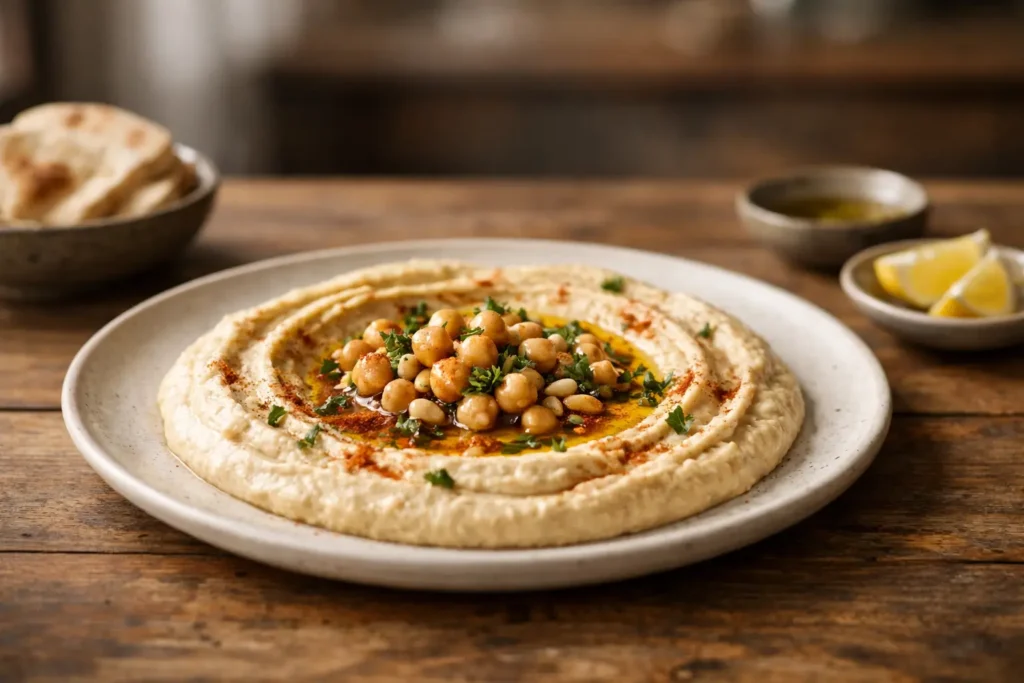
Tips for the Best Hummus Bowl
Use Good Hummus
Since hummus is the base of the whole bowl, quality matters. A smooth, flavorful hummus makes a big difference. Homemade is great, but a good store-bought one works very well too.
Balance the Textures
A hummus bowl is best when it includes something creamy, something crisp, something hearty, and something fresh. That contrast is what makes it satisfying.
Do Not Overdress It
Because hummus already acts like part of the sauce, the dressing should stay light. Too much can make the bowl feel heavy or watery.
Add Protein If You Want a Bigger Meal
Chickpeas help, but grilled chicken, falafel, tofu, or boiled eggs can make it even more filling.
Keep the Ingredients Fresh
This type of bowl relies on freshness. Crisp cucumbers, juicy tomatoes, and bright herbs help it taste lively instead of flat.
Easy Variations
One of the best things about a hummus bowl is how easy it is to change.
Add Falafel
Falafel is one of the most natural additions and turns the bowl into a more substantial Mediterranean-style meal.
Add Grilled Chicken
For extra protein, sliced grilled chicken pairs beautifully with hummus and fresh vegetables.
Add Roasted Vegetables
Roasted cauliflower, sweet potatoes, zucchini, or eggplant can add warmth and make the bowl feel heartier.
Use a Different Hummus Flavor
Roasted red pepper hummus, garlic hummus, or spicy hummus can give the bowl a slightly different personality.
Add Avocado
Avocado adds extra creaminess and works especially well if you want the bowl to feel more filling.
What to Serve with a Hummus Bowl
A hummus bowl is usually a full meal on its own, but a few extras can work nicely.
Warm pita bread
Falafel
Lentil soup
Cucumber salad
Roasted vegetables
Stuffed grape leaves
If I am serving this as lunch, I usually keep it on its own or add warm pita. For dinner, falafel or roasted vegetables make it feel more complete.
Serving Suggestions
Hummus bowls fit into several kinds of meals very easily.
For a Quick Lunch
Keep it simple with hummus, greens, vegetables, grains, and a light dressing.
For Dinner
Add falafel, chicken, or roasted vegetables to turn it into a heartier evening meal.
For Meal Prep
Store the ingredients separately and assemble just before eating for the best texture.
For a Build-Your-Own Bowl Meal
Set out hummus, grains, vegetables, and toppings so everyone can build their own bowl.
Nutritional Facts
Approximate per serving, depending on the grain, hummus, and toppings used:
Calories: 350 to 520
Protein: 10 to 18 grams
Fat: 16 to 26 grams
Carbohydrates: 32 to 48 grams
Fiber: 7 to 11 grams
Sodium: Varies depending on hummus and feta used
How to Store and Reheat
This recipe is excellent for make-ahead meals if stored thoughtfully.
Refrigerate
Store the grains, vegetables, hummus, and dressing in separate airtight containers in the refrigerator for up to 3 days.
Assemble Fresh
For the best texture, build the bowl just before eating. This keeps the vegetables crisp and the hummus fresh.
Reheat Only the Grain if Needed
If you prefer warm grains, reheat them separately and add them to the rest of the bowl just before serving.
Conclusion
A hummus bowl is one of those meals that proves fresh food can still feel satisfying and full of flavor. It has the creaminess of hummus, the heartiness of grains, the crunch of vegetables, and enough flexibility to work for almost any kind of meal.
That is what makes it so worth keeping around. It is easy to assemble, easy to customize, and easy to enjoy without feeling repetitive. Once you start making it, it quickly becomes one of those reliable bowls you can adapt again and again.
FAQs
1. What goes in a hummus bowl?
A hummus bowl usually includes hummus, grains, vegetables, greens, and toppings like chickpeas, feta, herbs, or seeds.
2. Can I make a hummus bowl ahead of time?
Yes. It works very well for meal prep if you keep the dressing separate and assemble it before eating.
3. Is a hummus bowl healthy?
It can be a very balanced meal with fiber, healthy fats, vegetables, and protein depending on the toppings you choose.
4. What protein goes well in a hummus bowl?
Falafel, grilled chicken, chickpeas, tofu, and boiled eggs all work well.
5. Can I use store-bought hummus?
Yes. A good-quality store-bought hummus works perfectly for this recipe.
6. What grain is best for a hummus bowl?
Quinoa, couscous, brown rice, and white rice all work well. Choose the one you like most or already have prepared.