
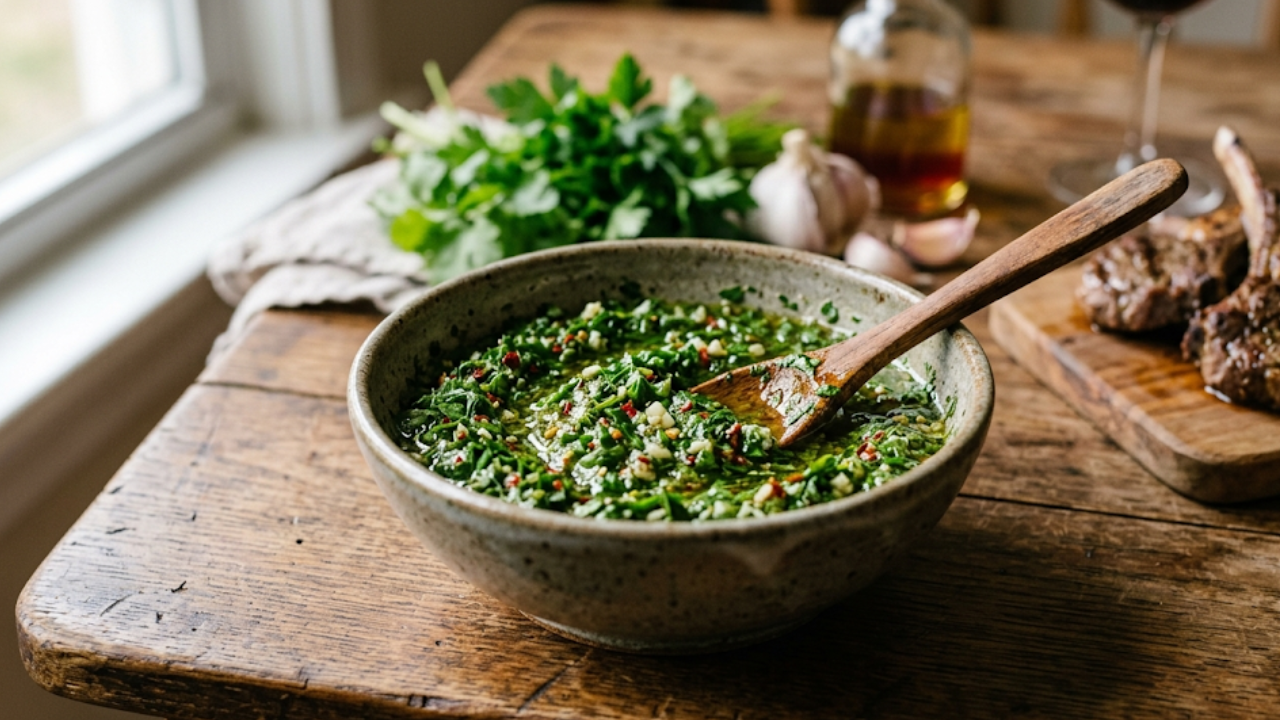
Chimichurri sauce is a fresh, vibrant herb sauce known for its bold flavor and simple ingredients. Originally from Argentina and Uruguay, this uncooked sauce is traditionally served with grilled meats, especially steak, but it also works well with chicken, seafood, vegetables, and even bread. The combination of parsley, garlic, olive oil, vinegar, and spices creates a bright, slightly tangy taste that balances rich foods perfectly.
One of the reasons chimichurri sauce is so popular is that it requires no cooking and takes only a few minutes to prepare. When made correctly, it should taste fresh, slightly garlicky, and well balanced between oil, herbs, and acidity. The texture should be loose and spoonable, not blended into a paste.
This recipe follows the traditional method used in South American kitchens, with helpful tips to make sure the flavor stays authentic and balanced.
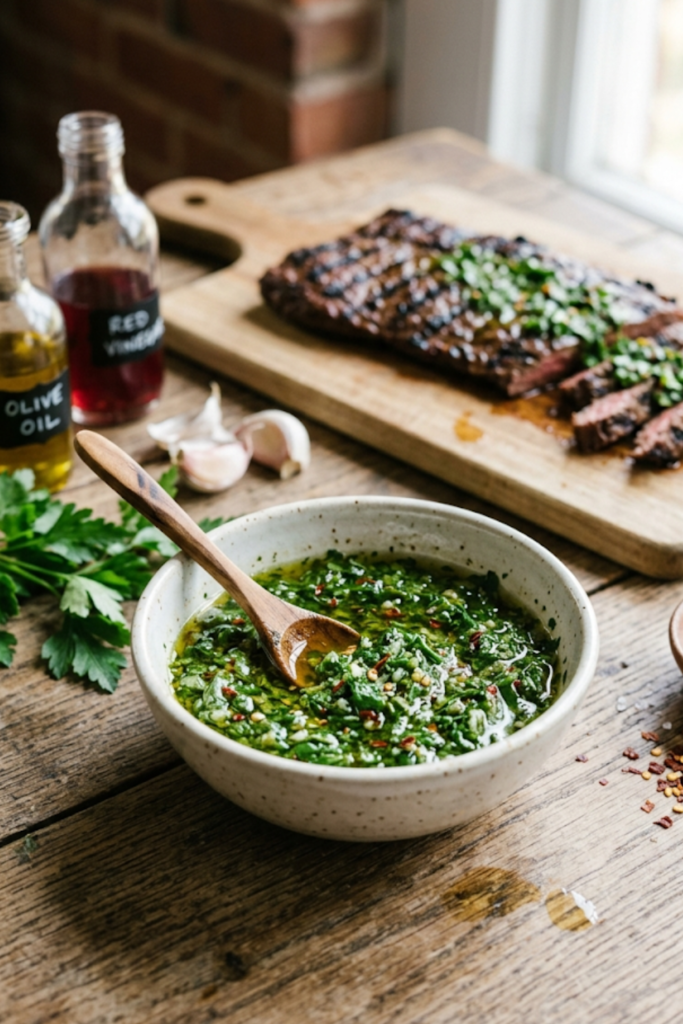
Why Chimichurri Sauce Is So Popular
Fresh and bold flavor
No cooking required
Made with simple ingredients
Perfect for grilled foods
Naturally dairy-free
Easy to customize
Chimichurri is often used instead of heavy sauces because it adds flavor without making food feel too rich.
What Is Chimichurri Sauce Made Of?
Traditional chimichurri includes:
Fresh parsley
Garlic
Olive oil
Vinegar
Oregano
Chili flakes
Salt and pepper
Some modern versions also add:
Cilantro
Lemon juice
Shallots
Red pepper
Basil
The key is keeping the herbs fresh and the texture slightly chunky.
Equipment
Cutting board
Sharp knife
Mixing bowl
Spoon
Measuring cups and spoons
Small jar or container
Garlic press (optional)
Ingredients
1 cup fresh parsley, finely chopped
3 cloves garlic, minced
½ cup olive oil
2 tablespoons red wine vinegar
1 teaspoon dried oregano
½ teaspoon red chili flakes
½ teaspoon salt
¼ teaspoon black pepper
1 tablespoon lemon juice (optional)
Optional additions:
Fresh cilantro
Shallots
Extra garlic
Paprika
Basil
Use fresh herbs for best flavor.
Timing and Servings
Prep Time: 10 minutes
Rest Time: 10 minutes
Total Time: 20 minutes
Servings: 6
Calories per serving: about 90 kcal
How to Make Chimichurri Sauce (Step-by-Step)
Step 1 – Chop the Parsley
Wash and dry parsley.
Chop finely with a knife.
Do not use a blender.
Hand chopping keeps the texture correct.
Step 2 – Prepare the Garlic
Mince garlic very small.
Garlic should blend with herbs.
Too large pieces can taste strong.
Fresh garlic gives best flavor.
Step 3 – Mix the Herbs
Add parsley and garlic to a bowl.
Add oregano and chili flakes.
Add salt and pepper.
Stir well.
This builds the base flavor.
Step 4 – Add Vinegar and Lemon
Pour in red wine vinegar.
Add lemon juice if using.
Stir gently.
Acid makes the sauce bright.
Do not add too much.
Step 5 – Add Olive Oil
Slowly pour olive oil.
Mix while adding.
Sauce should look loose.
Not thick.
Not watery.
Olive oil brings everything together.
Step 6 – Let It Rest
Let sauce sit 10 minutes.
Flavors will blend.
Taste and adjust salt.
Serve at room temperature.
Resting makes a big difference.
Tips for Authentic Flavor
Use fresh parsley only
Use good olive oil
Chop by hand
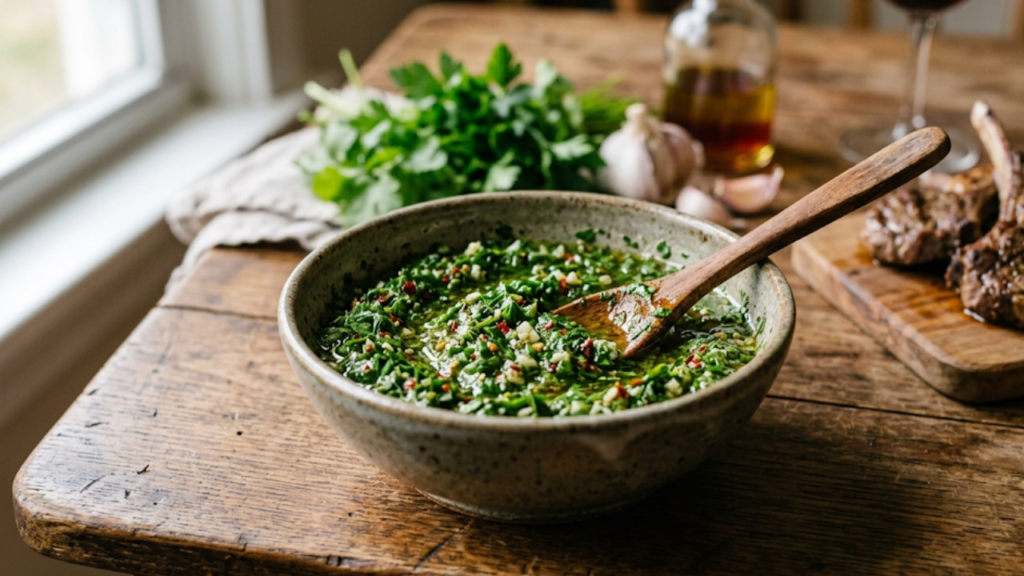
Do not blend smooth
Let sauce rest before serving
Adjust vinegar slowly
Traditional chimichurri should taste fresh, not creamy.
Variations of Chimichurri Sauce
Classic Argentinian Chimichurri
Parsley, garlic, oil, vinegar, oregano.
Simple and strong.
Cilantro Chimichurri
Replace some parsley with cilantro.
Brighter flavor.
Spicy Chimichurri
Add more chili flakes.
Good for grilled meat.
Lemon Chimichurri
Use lemon instead of vinegar.
Fresh and light.
Garlic Lovers Version
Add extra garlic.
Strong flavor.
Green Herb Blend
Add basil and cilantro.
Modern style.
All versions follow the same method.
What to Serve With Chimichurri Sauce
Grilled steak
Chicken
Fish
Shrimp
Roasted vegetables
Bread
Rice bowls
Potatoes
Chimichurri works best with grilled foods.
Storage Tips
Store in refrigerator up to 4 days.
Keep in sealed jar.
Stir before using.
Bring to room temperature before serving.
Do not freeze.
Fresh herbs change texture when frozen.
Common Mistakes to Avoid
Using dried parsley
Blending too smooth
Too much vinegar
Not enough salt
Using low-quality oil
Serving immediately without resting
Avoiding these mistakes keeps flavor authentic.
Nutritional Facts (Per Serving)
Calories: 90
Protein: 1g
Carbs: 2g
Fat: 9g
Fiber: 1g
Sugar: 0g
Sodium: 120mg
Cholesterol: 0mg
Conclusion
Chimichurri sauce is one of the simplest yet most flavorful sauces you can make at home. With fresh herbs, garlic, olive oil, and vinegar, it creates a bright and balanced taste that pairs perfectly with grilled meats, vegetables, and seafood. Because it requires no cooking, it is quick to prepare and easy to adjust based on your taste.
Once you learn the traditional method, chimichurri becomes a reliable sauce you can use anytime you want to add fresh, bold flavor without heavy ingredients.
FAQs
1. What does chimichurri taste like? Fresh, garlicky, slightly tangy, and herby.
2. Can I use cilantro instead of parsley? Yes, but traditional version uses parsley.
3. How long does chimichurri last? About 4 days in fridge.
4. Can I blend chimichurri? You can, but chopping is better.
5. Is chimichurri spicy? Mild, unless you add extra chili.
6. Can I use white vinegar? Yes, but red wine vinegar tastes better.