
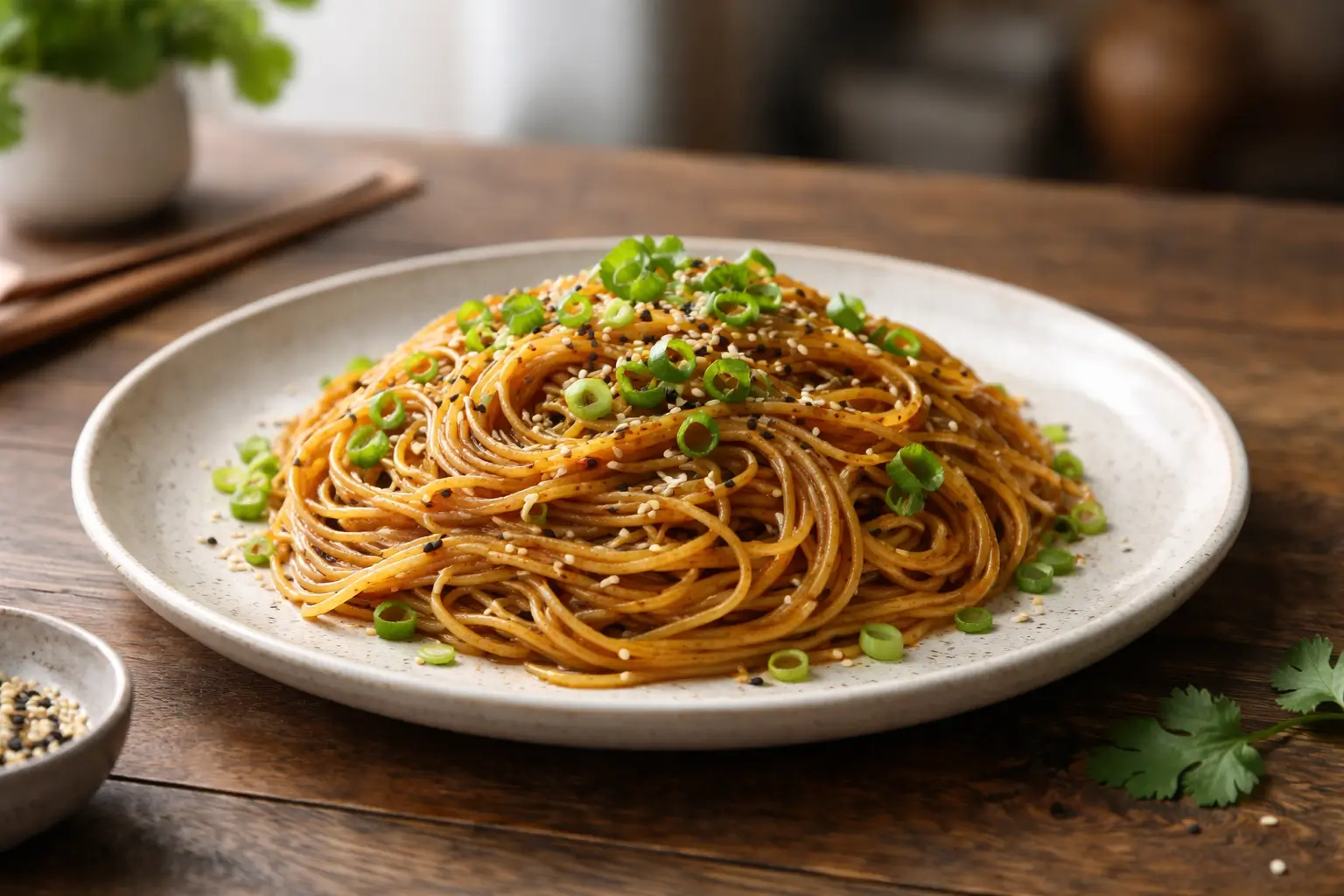
Sesame Noodles Recipe are one of those recipes that prove a simple dish can still be incredibly satisfying. They are quick to make, full of flavor, and flexible enough to serve as lunch, dinner, or even a side dish. The sauce usually combines soy sauce, sesame oil, garlic, and a touch of sweetness, creating noodles that taste savory, slightly nutty, and deeply comforting.
What makes sesame noodles so useful is how practical they are. They can be served warm, at room temperature, or chilled. They work for meal prep, busy weeknights, light lunches, or casual gatherings. You can keep them simple or build them out with vegetables and protein, depending on what you have in the kitchen.
This recipe focuses on balance. Good sesame noodles should not taste greasy or flat. The sauce should lightly coat the noodles, the sesame flavor should come through clearly without overpowering everything else, and the final dish should feel fresh, flavorful, and easy to keep coming back to.
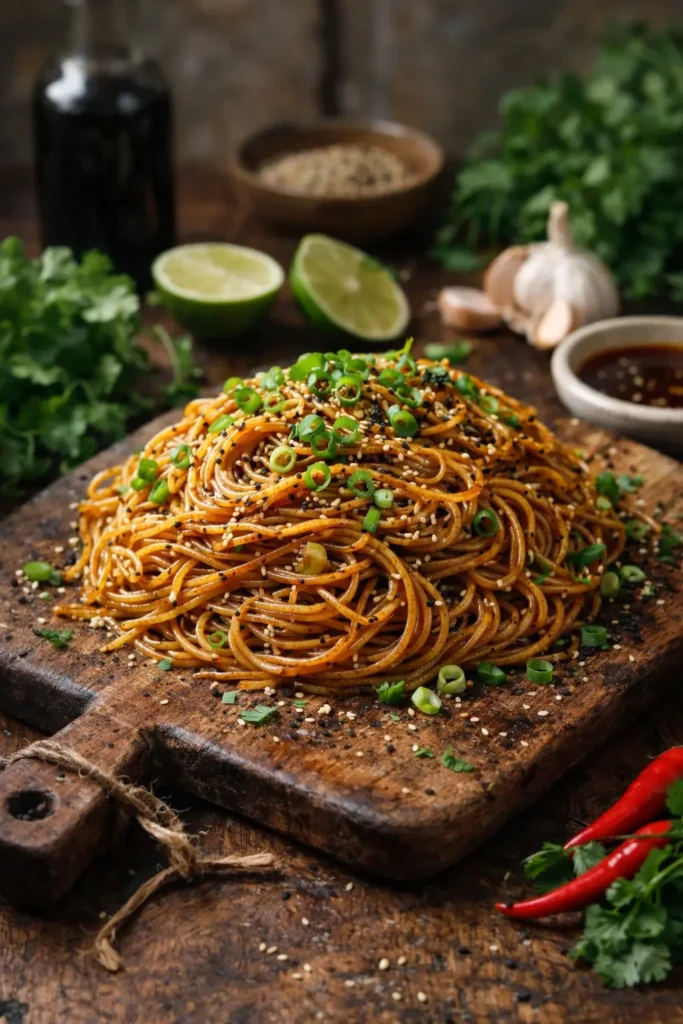
Why You’ll Love These Sesame Noodles
There is a reason sesame noodles stay popular in so many home kitchens.
Quick and easy to make
Full of savory, nutty flavor
Great warm, chilled, or at room temperature
Perfect for meal prep
Easy to customize with vegetables or protein
Made with pantry-friendly ingredients
Equipment
Large pot
Colander
Mixing bowl
Whisk
Knife
Cutting board
Measuring cups and spoons
Tongs or large spoon
Ingredients
12 ounces noodles such as spaghetti, ramen, lo mein, or rice noodles
3 tablespoons soy sauce
2 tablespoons toasted sesame oil
1 tablespoon rice vinegar
1 tablespoon peanut butter or tahini
1 tablespoon honey or brown sugar
2 garlic cloves, minced
1 teaspoon fresh ginger, grated
1 teaspoon chili crisp or red pepper flakes, optional
2 tablespoons warm water, more as needed
2 green onions, sliced
1 tablespoon toasted sesame seeds
1 cup shredded carrots
1 cup sliced cucumber or bell pepper, optional
Timing and Servings
Prep Time: 15 minutes
Cook Time: 10 minutes
Total Time: 25 minutes
Servings: 4
How to Make Sesame Noodles
1. Cook the Noodles
Bring a large pot of water to a boil and cook the noodles according to the package directions until just tender. Drain them in a colander and rinse briefly under cool water if you want the noodles to stop cooking and stay springy.
If you are serving the noodles warm, you can skip the long rinse and just toss them lightly so they do not stick together.
2. Make the Sesame Sauce
In a medium mixing bowl, whisk together the soy sauce, toasted sesame oil, rice vinegar, peanut butter or tahini, honey or brown sugar, garlic, ginger, and chili crisp if using. Add the warm water and whisk until smooth.
The sauce should be pourable and silky, not thick like a paste. If it seems too heavy, add a little more warm water, one teaspoon at a time.
3. Toss the Noodles with the Sauce
Transfer the cooked noodles to a large bowl. Pour the sesame sauce over them and toss well until the noodles are evenly coated.
This is the step where texture really matters. You want the sauce to cling to the noodles without pooling too much at the bottom of the bowl.
4. Add the Fresh Ingredients
Add the green onions, sesame seeds, shredded carrots, and cucumber or bell pepper if using. Toss again until everything is mixed through.
These fresh ingredients add crunch and keep the dish from feeling too heavy.
5. Taste and Adjust
Taste the noodles and adjust if needed. A little extra soy sauce can deepen the savory flavor, a few drops of sesame oil can strengthen the nutty note, and a splash of rice vinegar can brighten everything up.
Serve immediately, chill for later, or let the noodles sit for a few minutes so the flavors settle in.
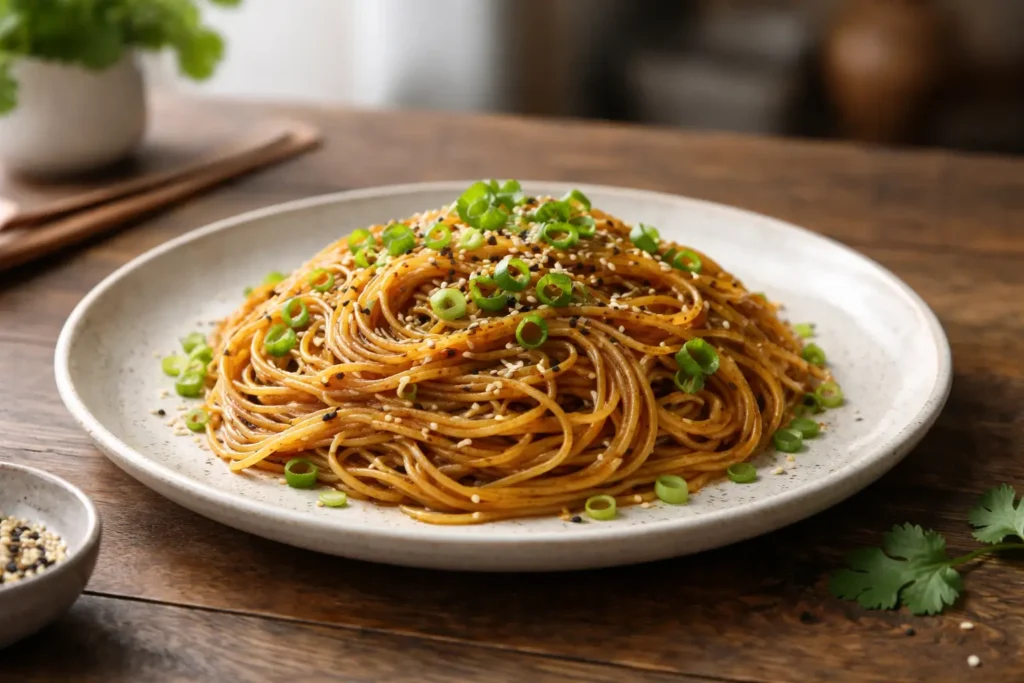
Tips for the Best Sesame Noodles
Use Toasted Sesame Oil
Toasted sesame oil has a deeper, nuttier flavor than regular sesame oil. Since it is one of the signature ingredients, it makes a noticeable difference.
Do Not Overcook the Noodles
Sesame noodles are best when the noodles still have a little bite. Overcooked noodles can turn soft and heavy once the sauce is added.
Thin the Sauce Properly
A common mistake is making the sauce too thick. A little warm water helps loosen it so it coats the noodles evenly instead of clumping.
Balance Sweet, Savory, and Tangy Flavor
The best sesame noodles taste balanced. If the sauce feels flat, it usually needs either a touch more vinegar for brightness or a bit more soy sauce for depth.
Add Crunch Right Before Serving
If you are using cucumbers, bell peppers, or sesame seeds, adding them closer to serving time helps them stay crisp.
Easy Variations
Sesame noodles are easy to adapt, which is one of the reasons they are so useful.
Add Chicken
Shredded cooked chicken turns sesame noodles into a more filling lunch or dinner without much extra work.
Add Shrimp
Cooked shrimp pair very well with the nutty sesame sauce and make the dish feel a little more special.
Make It Spicy
Add more chili crisp, sriracha, or red pepper flakes if you like a stronger kick.
Add More Vegetables
Julienned carrots, cucumbers, edamame, cabbage, and bell peppers all work very well here.
Try a Creamier Sauce
If you enjoy richer sesame noodles, increase the peanut butter or tahini slightly for a creamier finish.
What to Serve with Sesame Noodles
Sesame noodles can be a main dish on their own, but they also work beautifully with simple sides.
Steamed dumplings
Stir-fried vegetables
Cucumber salad
Edamame
Grilled chicken
Pan-seared tofu
If I am serving sesame noodles for lunch, I often keep them simple with cucumbers and carrots. For dinner, adding tofu, shrimp, or chicken makes the meal more complete.
Serving Suggestions
Sesame noodles are one of the easiest dishes to fit into different meals and occasions.
A few good serving ideas are:
Sesame noodles served chilled for lunch
Warm sesame noodles with sautéed vegetables
Sesame noodles topped with grilled chicken
Sesame noodles as a side dish for Asian-inspired dinners
Nutritional Facts
Approximate per serving, depending on ingredients and noodle type:
Calories: 360 to 460
Protein: 8 to 14 grams
Fat: 12 to 18 grams
Carbohydrates: 48 to 58 grams
Fiber: 2 to 4 grams
Sodium: Varies depending on soy sauce used
How to Store and Reheat
This recipe is especially useful because it stores well.
Refrigerate
Store sesame noodles in an airtight container in the refrigerator for up to 3 days.
Refresh Before Serving
Cold noodles can absorb sauce as they sit. Toss them with a small splash of water or a few drops of sesame oil before serving to loosen them up.
Reheat or Serve Cold
These noodles are excellent chilled, but you can also warm them gently if you prefer. Just avoid overheating, which can dry them out.
Conclusion
Sesame noodles are one of the most practical recipes to keep in your rotation. They are quick, flavorful, and easy to adapt, which makes them just as useful for busy weekday lunches as they are for simple dinners. The nutty sesame flavor, savory sauce, and tender noodles come together in a way that feels satisfying without being complicated.
Once you make them a couple of times, they quickly become the kind of recipe you can adjust from memory. That is usually the sign of a genuinely good dish: easy enough to repeat, flexible enough to make your own, and flavorful enough that you actually want to.
FAQs
1. Can I make sesame noodles ahead of time?
Yes, sesame noodles are great for making ahead. In fact, they often taste even better after the sauce has had time to settle in.
2. What noodles work best for sesame noodles?
Spaghetti, lo mein, ramen, and rice noodles all work well. Choose the texture you prefer and what you already have on hand.
3. Can I make sesame noodles without peanut butter?
Yes. Tahini works well, or you can leave it out for a lighter sauce that is more soy and sesame focused.
4. Are sesame noodles served hot or cold?
They can be served either way. Many people enjoy them chilled or at room temperature, but they are also very good warm.
5. How do I keep sesame noodles from getting dry?
Make sure the sauce is loose enough when mixing, and refresh leftovers with a splash of water or a little sesame oil.
6. Can I add protein to sesame noodles?
Yes. Chicken, shrimp, tofu, and edamame are all excellent additions.