
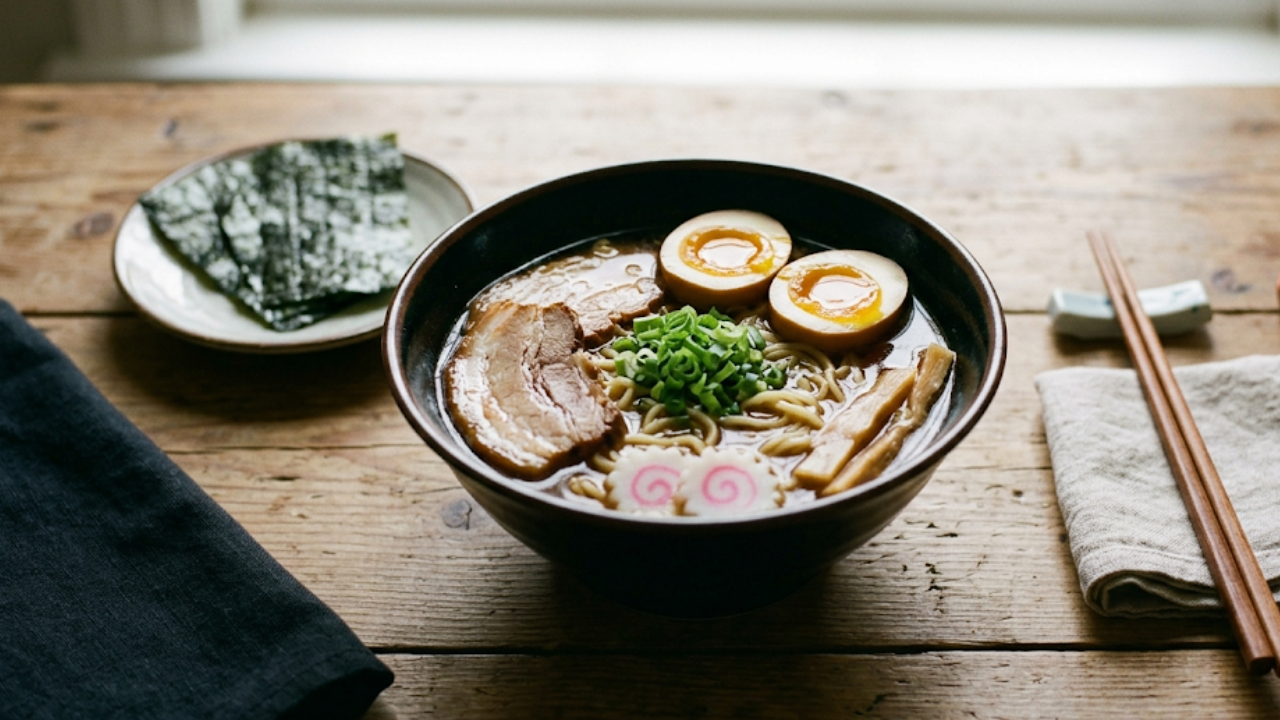
A great bowl of ramen is unforgettable—but what truly elevates it is that rich, flavorful, soft-centered egg resting on top. Known as ajitsuke tamago, or ramen eggs, these marinated soft-boiled eggs are prized for their silky yolk and deeply savory taste.
Making ramen eggs at home might seem like a small detail, but it’s one of those techniques that instantly upgrades your cooking. With the right timing and a simple marinade, you can recreate that restaurant-quality finish in your own kitchen—whether you’re topping ramen, rice bowls, or even enjoying them as a snack.
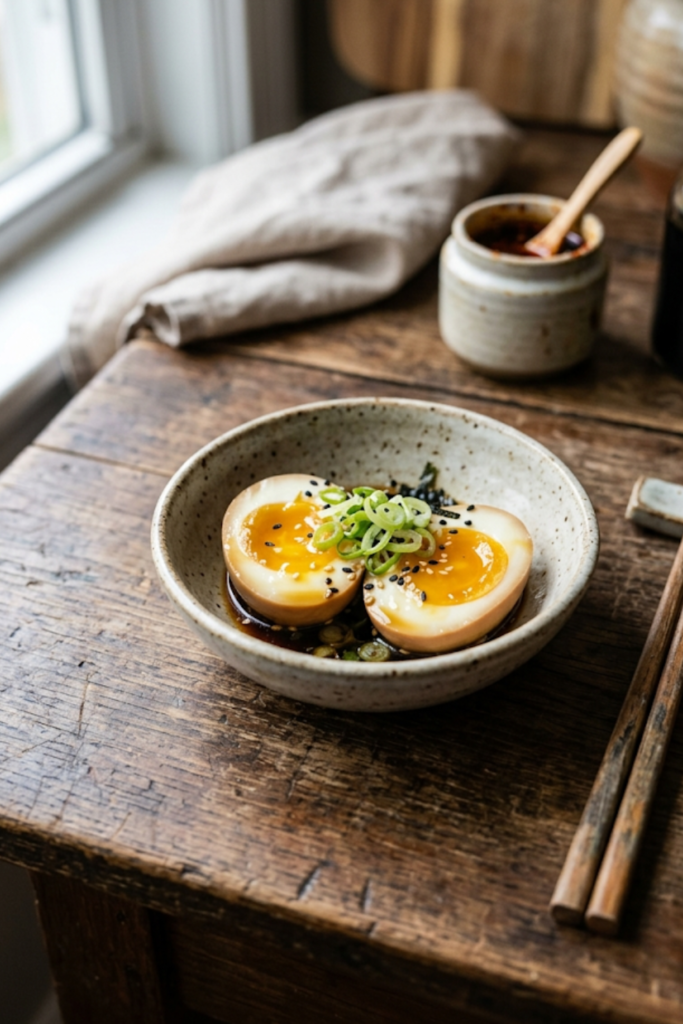
Why This Recipe Is Popular / Why You’ll Love It
Perfectly jammy yolk with a creamy texture
Deep umami flavor from a simple marinade
Easy to prepare with minimal ingredients
Great for meal prep and quick protein snacks
Versatile—pairs with ramen, rice, salads, and more
Equipment
Medium saucepan
Slotted spoon
Mixing bowl
Ice bath (bowl with ice and water)
Airtight container or zip-lock bag
Measuring cups and spoons
Ingredients
6 large eggs
Water (for boiling)
For the Marinade
½ cup soy sauce
½ cup water
2 tablespoons mirin
1 tablespoon sugar
1 teaspoon sesame oil (optional)
2 cloves garlic, smashed
1-inch ginger slice
Timing and Servings
Prep Time: 10 minutes
Cook Time: 7 minutes
Marinating Time: 4 to 24 hours
Total Time: About 30 minutes (plus marination)
Servings: 6 eggs
Calories per serving: ~70 kcal per egg
How to Make (Step-by-Step Instructions)
Step 1: Bring Water to a Boil
Fill a saucepan with enough water to cover the eggs. Bring it to a gentle boil over medium heat.
Step 2: Add the Eggs Carefully
Using a spoon, gently lower the eggs into the boiling water. This prevents cracking and ensures even cooking.
Step 3: Cook for Perfect Jammy Yolks
Boil the eggs for exactly 6½ to 7 minutes. This timing gives you a soft, custard-like center without being runny.
Step 4: Ice Bath Immediately
Transfer the eggs to an ice bath right away. Let them cool for at least 5 minutes to stop the cooking process.
Step 5: Peel Gently
Crack the shell lightly and peel under running water. Fresh eggs can be harder to peel, so take your time.
Step 6: Prepare and Marinate
Mix all marinade ingredients in a bowl. Place peeled eggs in a container and pour the marinade over them. Refrigerate for at least 4 hours, ideally overnight for deeper flavor.
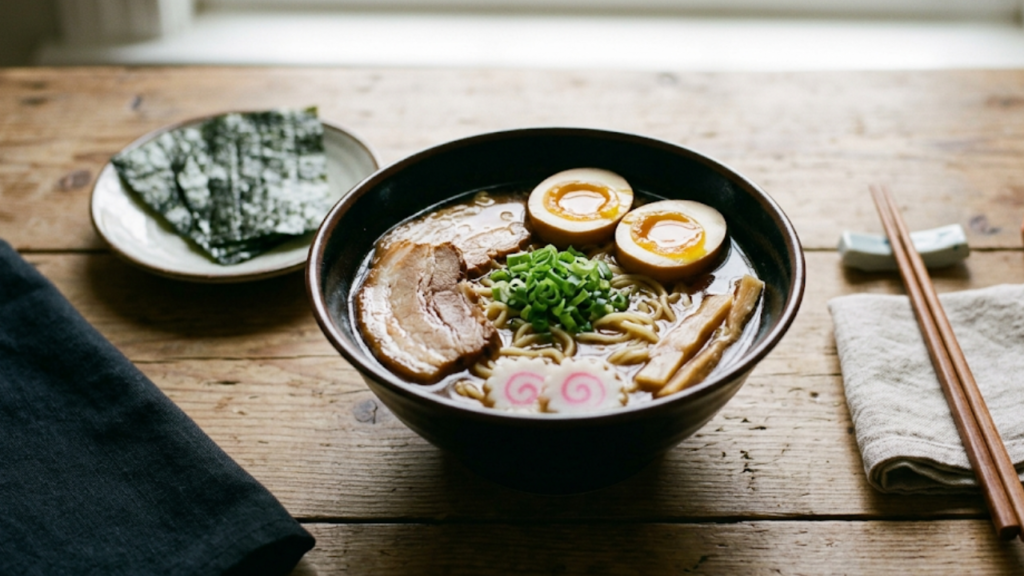
Tips for Best Results
Use slightly older eggs—they peel more easily
Maintain precise boiling time for the perfect yolk texture
Always use an ice bath to prevent overcooking
Turn eggs halfway during marination for even color
Don’t skip mirin—it adds subtle sweetness and balance
Variations
Spicy Ramen Eggs: Add chili oil or sliced red chilies to the marinade
Garlic Soy Eggs: Increase garlic for a stronger savory flavor
Tea-Infused Eggs: Add a brewed tea bag to the marinade for depth
Low-Sodium Version: Use low-sodium soy sauce and dilute with more water
What to Serve With It
Classic ramen bowls
Steamed rice or rice bowls
Noodles and stir-fries
Avocado toast for a fusion twist
Salads for added protein
Storage and Reheating
Refrigerator: Store marinated eggs in an airtight container for up to 3 days
Do not freeze: Texture will change significantly
Serving tip: Enjoy cold or bring to room temperature—avoid reheating to preserve texture
Common Mistakes to Avoid
Overcooking the eggs (results in hard yolks)
Skipping the ice bath (leads to uneven texture)
Not marinating long enough (flavor won’t develop fully)
Using too strong marinade without dilution (can overpower the egg)
Peeling eggs roughly (damages the smooth surface)
Nutritional Facts (Per Serving)
Calories: 70 kcal
Protein: 6g
Carbohydrates: 1g
Fat: 5g
Fiber: 0g
Sugar: 1g
Sodium: 300mg
Cholesterol: 185mg
Conclusion
Ramen eggs may look simple, but they bring a level of flavor and texture that can completely transform a dish. Once you master the timing and marinade, they become one of the easiest ways to elevate everyday meals.
What makes this recipe truly worth repeating is its consistency. With just a few ingredients and a bit of patience, you’ll get perfectly jammy, flavorful eggs every time. Whether you’re building a ramen bowl or adding a protein boost to your meals, this is a technique you’ll come back to often.
FAQs
1. How long should I marinate ramen eggs?
At least 4 hours, but overnight is ideal for deeper flavor.
2. Can I reuse the marinade?
Yes, you can reuse it once if stored properly, but the flavor will be slightly diluted.
3. Why are my eggs hard instead of soft?
They were likely overcooked. Stick to 6½–7 minutes for a jammy yolk.
4. Can I make ramen eggs without mirin?
Yes, substitute with a little sugar and rice vinegar for a similar balance.
5. Are ramen eggs eaten hot or cold?
They are usually served slightly chilled or at room temperature for the best texture.