
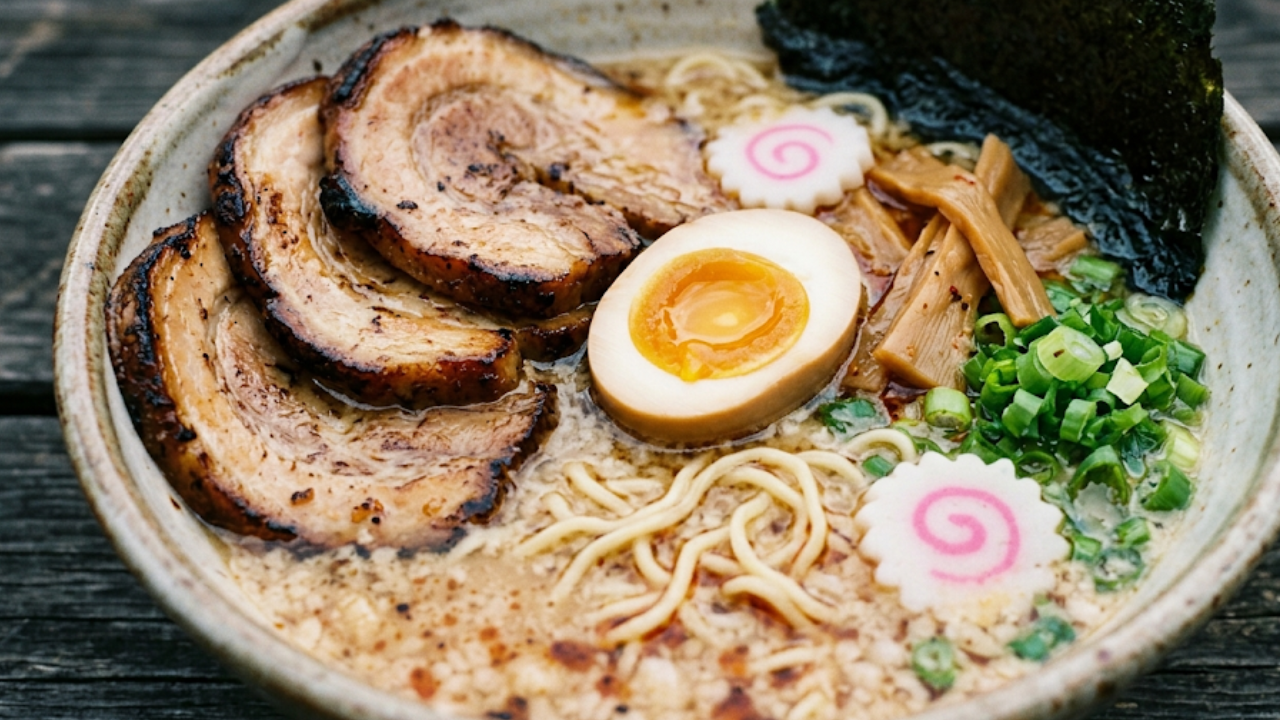
A steaming bowl of pork ramen is more than just a meal—it’s an experience built on layers of flavor. From the deeply savory broth to the tender slices of pork and perfectly cooked noodles, every element plays a role in creating that comforting, restaurant-quality bowl.
Inspired by traditional Japanese ramen, this pork ramen recipe focuses on building flavor the right way—slow simmering, balanced seasoning, and thoughtful assembly. While authentic ramen can take hours or even days, this version is designed to be practical without sacrificing depth. Once you understand the basics, you’ll find it surprisingly achievable at home.
Why This Recipe Is Popular / Why You’ll Love It
Deep, rich umami flavor from pork-based broth
Restaurant-quality results at home
Customizable toppings and spice levels
Perfect balance of protein, carbs, and comfort
Ideal for both special meals and weekend cooking
Equipment
Large stockpot or Dutch oven
Fine mesh strainer
Medium saucepan
Tongs
Ladle
Cutting board and sharp knife
Mixing bowls
Ingredients
For the Broth
500g pork belly or pork shoulder
6 cups water
2 cups chicken broth
4 garlic cloves, smashed
1-inch ginger, sliced
2 tablespoons soy sauce
1 tablespoon miso paste
1 teaspoon sesame oil
Salt to taste
For the Ramen
200g ramen noodles
2 soft-boiled eggs (halved)
1 cup sliced mushrooms
2 green onions, chopped
1 sheet nori (seaweed), cut into strips
1 teaspoon chili oil (optional)
Timing and Servings
Prep Time: 20 minutes
Cook Time: 1 hour 30 minutes
Total Time: 1 hour 50 minutes
Servings: 2 to 3 servings
Calories per serving: ~550 kcal
How to Make (Step-by-Step Instructions)
Step 1: Prepare the Pork
Cut the pork into large chunks. This helps it cook evenly and release flavor into the broth.
Step 2: Build the Broth Base
In a large pot, combine pork, water, chicken broth, garlic, and ginger. Bring to a boil, then reduce to a gentle simmer.
Step 3: Simmer for Depth
Let the broth simmer uncovered for about 60–90 minutes. Skim off any foam that rises to the top for a cleaner taste.
Step 4: Season the Broth
Add soy sauce, miso paste, and sesame oil. Stir well and taste. Adjust salt if needed.
Step 5: Cook the Noodles
In a separate pot, cook ramen noodles according to package instructions. Drain and set aside.
Step 6: Assemble the Bowl
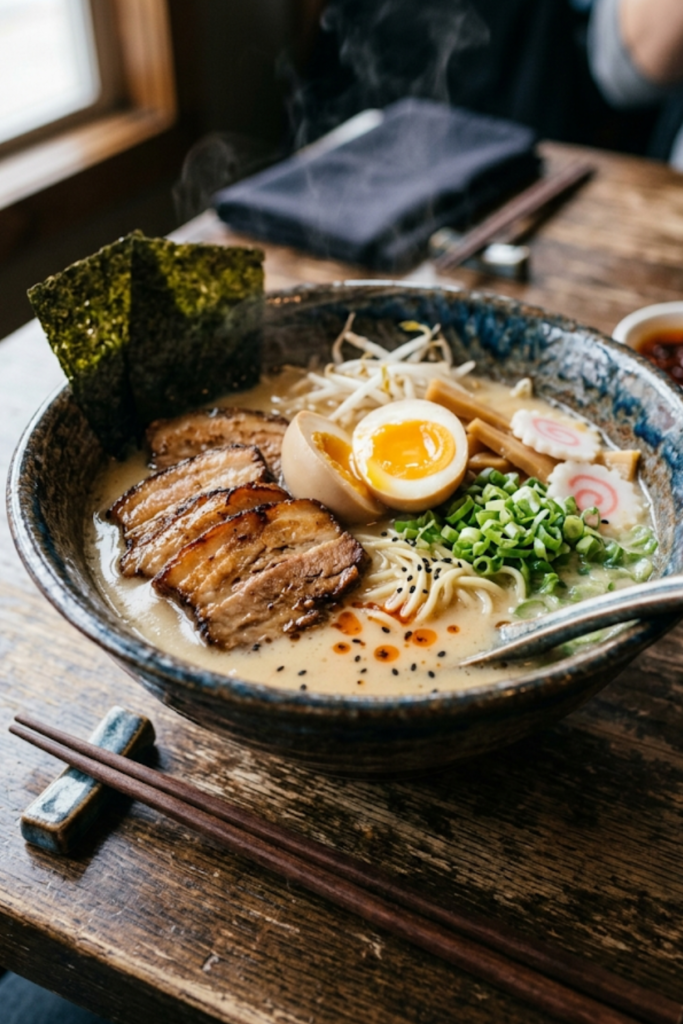
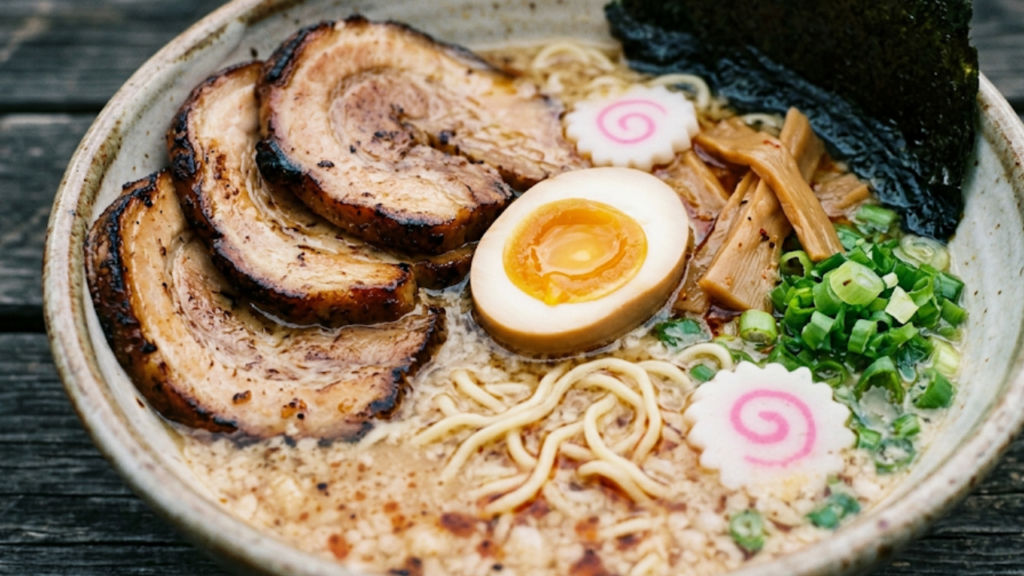
Divide noodles into bowls. Ladle hot broth over them, then top with sliced pork, soft-boiled eggs, mushrooms, green onions, and nori. Add chili oil if you prefer heat.
Tips for Best Results
Simmer gently, not rapidly, for a clearer and more balanced broth
Skim impurities regularly for better flavor
Use good-quality soy sauce and miso for depth
Cook noodles separately to prevent them from becoming soggy
Slice pork thinly for better texture and presentation
Variations
Spicy Pork Ramen: Add chili paste or extra chili oil
Creamy Tonkotsu Style: Simmer bones longer for a richer, milky broth
Garlic Lover’s Version: Increase garlic and add roasted garlic oil
Vegetable Boost: Add corn, spinach, or bamboo shoots
What to Serve With It
Gyoza (Japanese dumplings)
Steamed rice
Pickled vegetables
Seaweed salad
Light cucumber salad
Storage and Reheating
Refrigerator: Store broth and toppings separately for up to 3 days
Freezer: Broth can be frozen for up to 1 month
Reheating: Warm broth on the stovetop and assemble fresh with noodles
Common Mistakes to Avoid
Boiling broth too aggressively (makes it cloudy and harsh)
Overcooking noodles (they turn mushy quickly)
Under-seasoning broth (taste and adjust carefully)
Skipping aromatics like garlic and ginger
Adding noodles too early into the broth
Nutritional Facts (Per Serving)
Calories: 550 kcal
Protein: 28g
Carbohydrates: 45g
Fat: 30g
Fiber: 3g
Sugar: 4g
Sodium: 900mg
Cholesterol: 120mg
Conclusion
Pork ramen is one of those dishes that feels complex but becomes approachable once you break it down. The key lies in patience—letting the broth develop, balancing flavors, and assembling everything thoughtfully.
With this recipe, you’re not just making a bowl of noodles—you’re creating a layered, satisfying meal that rivals what you’d find in a good ramen shop. Once you try it, it’s easy to see why pork ramen remains a favorite around the world.
FAQs
1. What cut of pork is best for ramen?
Pork belly and pork shoulder are ideal because they add richness and tender texture.
2. Can I make pork ramen ahead of time?
Yes, the broth can be made in advance and stored. Assemble fresh when serving.
3. Is ramen broth supposed to be cloudy?
Some styles are clear, while others like tonkotsu are intentionally cloudy and creamy.
4. Can I use instant noodles?
Yes, but discard the seasoning packet and use your homemade broth instead.
5. How can I make it less fatty?
Use leaner cuts of pork and skim excess fat from the broth.