
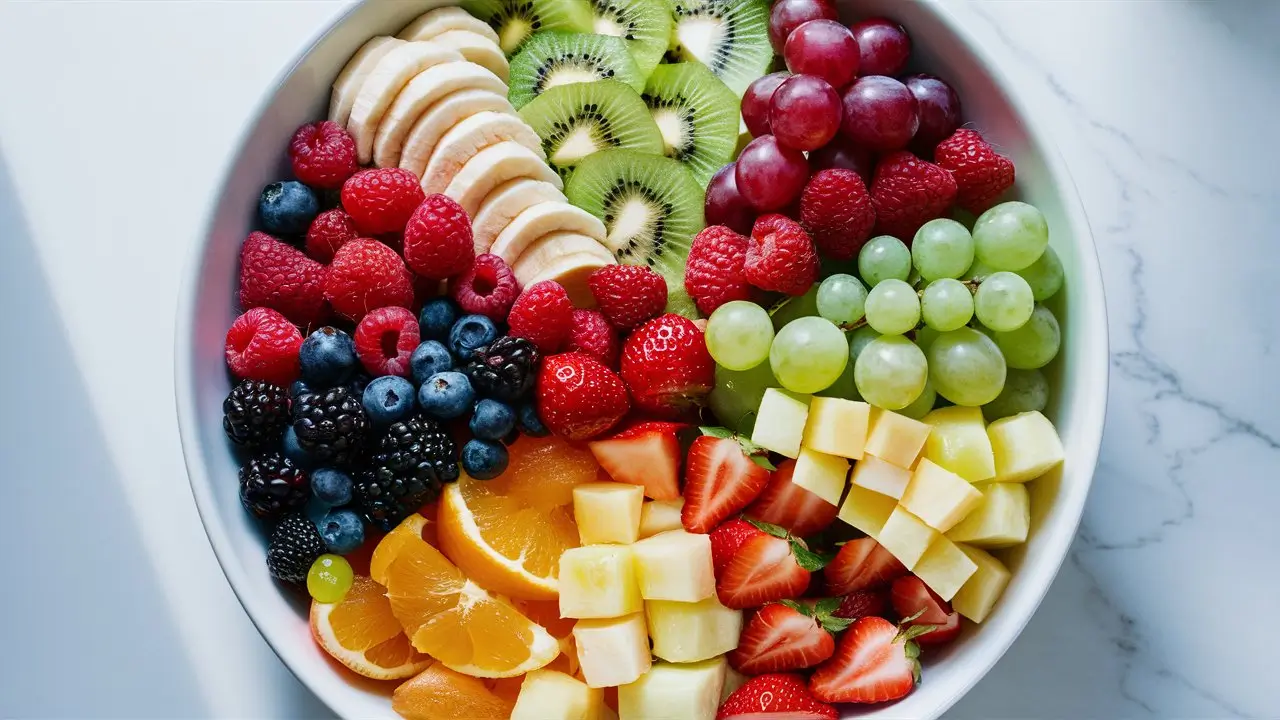
If you’re craving something light, healthy, and bursting with natural sweetness, a fruit salad is always a winning choice. Whether you’re making it for a summer picnic, brunch party, or just a quick snack at home, fruit salad is a simple dish that celebrates the beauty of fresh, seasonal produce.
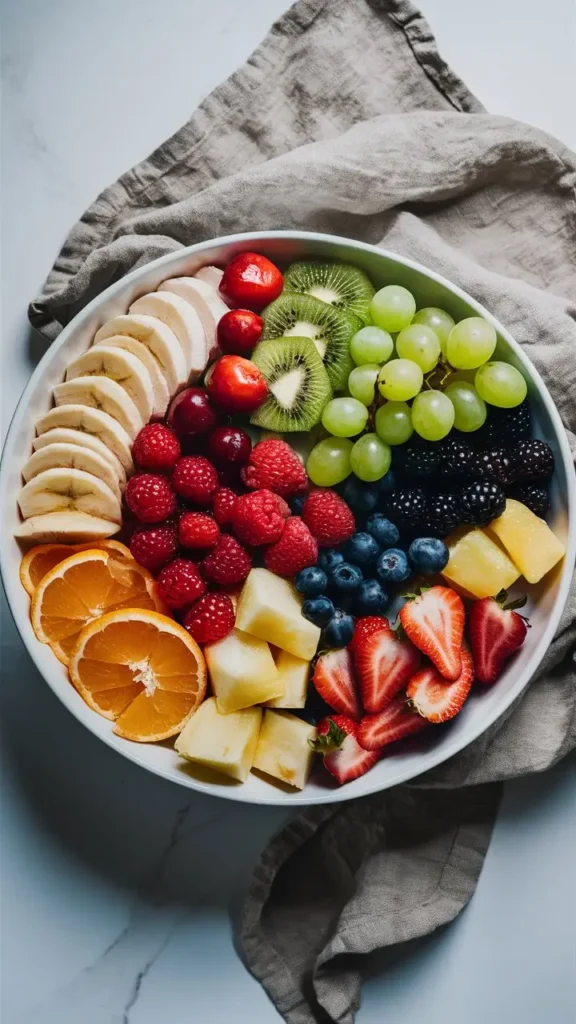
Why You’ll Love This Fruit Salad
Naturally sweet and refreshing
No cooking required
Easily customizable for any season
Packed with vitamins, fiber, and antioxidants
Great for parties, holidays, or meal prep
Ingredients List
2 cups strawberries, hulled and halved
2 cups pineapple, diced
2 cups grapes, halved
2 kiwis, peeled and sliced
2 bananas, sliced
1 cup blueberries
1 orange, peeled and segmented
Juice of 1 lime (or lemon)
1–2 tablespoons honey (optional)
Fresh mint leaves, chopped (optional, for garnish)
Timing & Servings
Prep Time: 15–20 minutes
Total Time: 20 minutes
Servings: 6
Step-by-Step Instructions for Fruit Salad
Step 1: Wash and Prep the Fruit
Rinse all fruits under cold running water. Use a colander for berries and grapes, and gently pat dry. Peel, hull, and slice each fruit according to size and shape.
Step 2: Mix the Dressing
In a small bowl, whisk together:
Juice of 1 lime (or lemon)
1–2 tablespoons of honey (adjust based on sweetness of fruit)
This light dressing enhances the flavors without overpowering them.
Step 3: Combine Gently
In a large mixing bowl, add all the prepped fruit. Drizzle the dressing over the top. Use a large spoon or rubber spatula to gently toss everything together. Try not to over-mix—fruit can bruise easily.
Step 4: Add Garnish and Serve
Top with chopped fresh mint leaves if using. Serve immediately for the freshest texture.
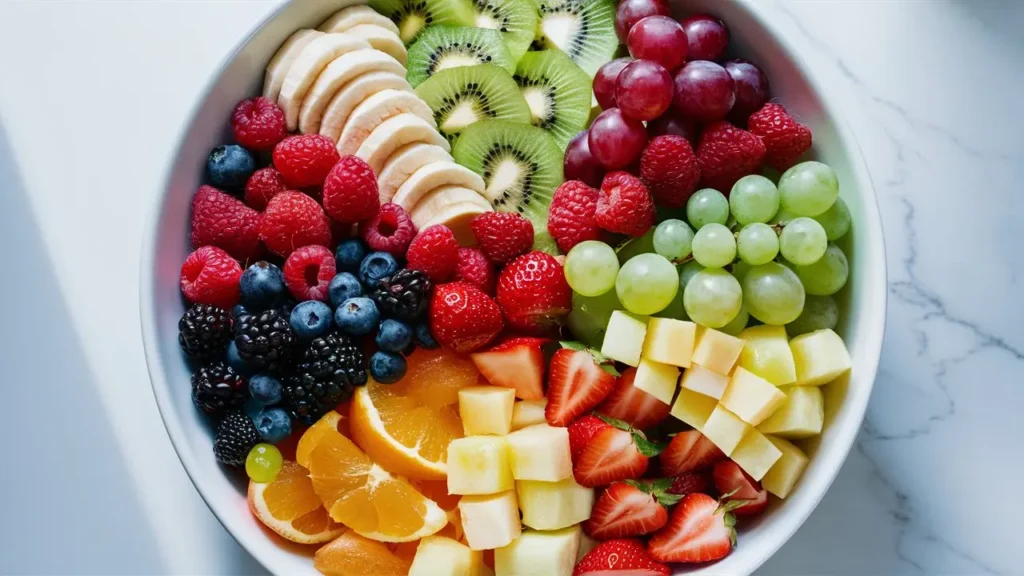
Choosing the Best Fruits for Your Salad
A great fruit salad relies on fresh, ripe fruit. You want a balance of color, texture, and flavor—sweet, tart, juicy, and crunchy.
Best Fruits for Texture and Color
Berries (blueberries, strawberries, raspberries)
Citrus (oranges, mandarins, grapefruit)
Melons (cantaloupe, watermelon, honeydew)
Stone fruits (peaches, nectarines, plums)
Grapes and kiwis for tartness and vibrant green
Bananas and apples for creaminess (add just before serving to prevent browning)
Fruits to Use with Caution
Mangoes and papayas can be mushy if too ripe
Pears brown quickly unless tossed in citrus juice
Avocados can add richness but don’t hold well in salad form
Make-Ahead Tips
Want to prep your fruit salad in advance? Here’s how:
Chop sturdier fruits (grapes, melons, pineapple, citrus) the night before.
Avoid slicing bananas or apples until just before serving to prevent browning.
Store in an airtight container in the fridge for up to 24 hours.
Add dressing and garnish right before serving for best texture and flavor.
Fruit Salad Variations to Try
Tropical Fruit Salad
Pineapple, mango, kiwi, banana, papaya, coconut flakes
Lime juice and honey dressing
Berry Fruit Salad
Strawberries, blueberries, raspberries, blackberries
Lemon juice with maple syrup or agave
Citrus Winter Salad
Oranges, grapefruits, pomegranate seeds
Mint, honey, and a pinch of sea salt
Melon Medley
Cantaloupe, honeydew, watermelon
Optional: drizzle with lime juice and chili powder
Best Dressings for Fruit Salad
While many fruit salads need no extra dressing, here are some optional ones to elevate your bowl:
Citrus-Honey Dressing
Juice of 1 lime
2 tablespoons honey
Optional: zest of orange or lime
Yogurt Poppy Seed Dressing
½ cup plain Greek yogurt
1 tablespoon honey
1 teaspoon poppy seeds
Splash of vanilla extract
Mint-Lime Syrup
¼ cup water
¼ cup sugar or honey
1 tablespoon chopped mint
Juice of 1 lime
Simmer, then cool before using
Tips for the Perfect Fruit Salad
Use ripe, seasonal fruit for the best taste
Balance sweet and tart flavors—add citrus if your mix is too sweet
Cut fruit in uniform sizes for even distribution
Add delicate fruit last (like raspberries or bananas)
Avoid over-mixing to prevent bruising
How to Keep Fruit Salad Fresh
To keep fruit salad fresh and crisp:
Store in a glass or airtight container in the fridge
Avoid airtight containers if fruit is very juicy—leave space for airflow
Add acidic fruits like oranges or kiwi to slow browning
Stir just before serving for best texture
Can You Freeze Fruit Salad?
Freezing isn’t recommended for fruit salad as the texture changes when thawed. However, leftover fruit salad can be:
Blended into smoothies
Mixed into yogurt or oatmeal
Frozen into popsicles
Serving Ideas for Fruit Salad
Fruit salad can shine as more than just a side dish. Try these serving ideas:
Breakfast: Serve over pancakes, waffles, or oatmeal
Brunch: Pair with quiche, croissants, or muffins
Lunch or Dinner: Serve alongside grilled meats or as a palate cleanser
Dessert: Top with whipped cream or yogurt, or layer into a parfait
Nutritional Information (Per Serving)
Here’s an approximate breakdown for one serving (based on 6 servings total):
Calories: 120
Protein: 1g
Carbohydrates: 30g
Sugar: 20g (natural)
Fat: 0g
Fiber: 4g
Sodium: 5mg
Note: Nutrition varies based on fruit and dressing
FAQs
Can I use canned fruit?
You can, but fresh fruit is best. If using canned fruit, choose varieties packed in juice (not syrup) and drain well.
How do I keep fruit from browning?
Toss with lemon or lime juice. Apples, pears, and bananas are most prone to browning.
Is fruit salad healthy?
Yes! It’s naturally low in calories and high in fiber, vitamins, and antioxidants.
Can I make fruit salad without dressing?
Absolutely. Fresh fruit is delicious on its own. Dressing is optional for added flavor.
Conclusion
Fruit salad is one of the most versatile, beautiful, and healthful dishes you can make. It works for all occasions—from family breakfasts to summer cookouts—and is endlessly customizable based on your taste and what’s in season.
With this guide, you have all the tools to create a fruit salad that’s not just fresh and flavorful but visually stunning and nutrition-packed. Don’t forget to garnish with mint and serve chilled for the best experience.