
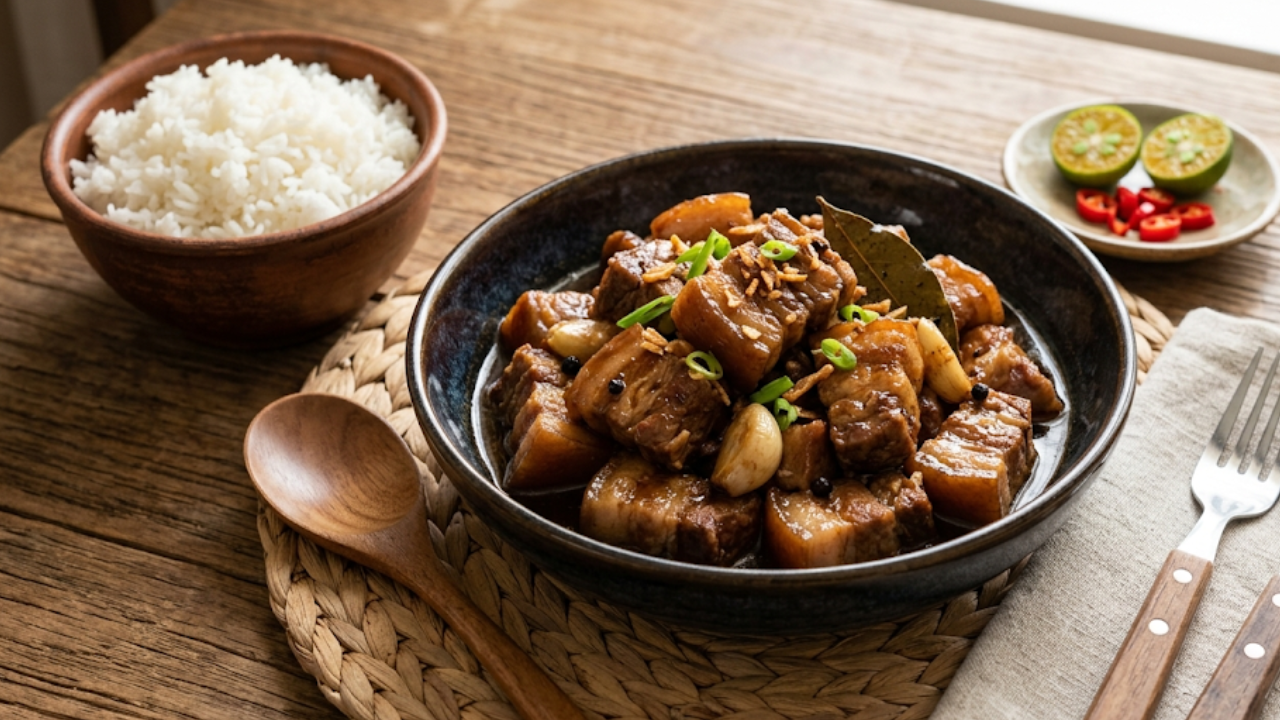
Filipino pork adobo is one of the most iconic dishes in Filipino cuisine, known for its bold, savory, and tangy flavor profile. Made by simmering pork in a mixture of soy sauce, vinegar, garlic, and spices, this dish delivers deep, comforting flavors that only get better over time.
What makes pork adobo truly special is its simplicity and reliability. With just a few pantry staples and a slow simmer, you can create a dish that feels rich, balanced, and deeply satisfying. From experience, the key lies in patience—allowing the pork to absorb the sauce while gently reducing it into a glossy, flavorful coating.
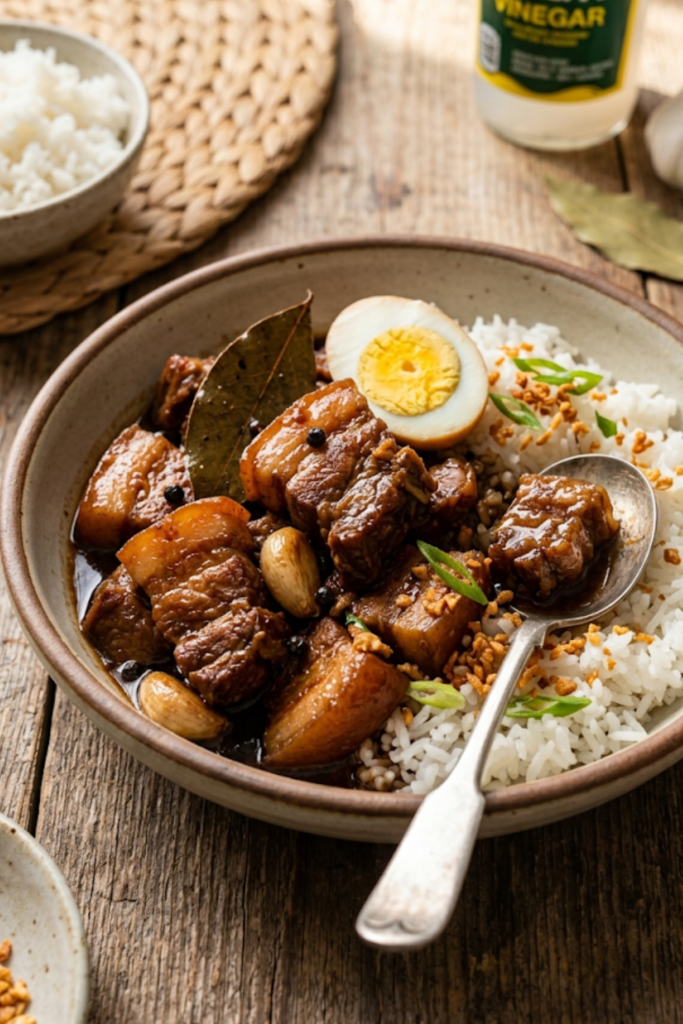
Why This Recipe Is Popular / Why You’ll Love It
Classic Filipino comfort food
Perfect balance of salty, tangy, and savory flavors
Uses simple, everyday ingredients
Tastes even better the next day
Easy to prepare with minimal effort
Equipment
Large skillet or heavy-bottom pot
Mixing bowl
Knife and cutting board
Measuring cups and spoons
Tongs or spatula
Ingredients
700g pork belly or pork shoulder (cut into chunks)
½ cup soy sauce
⅓ cup white vinegar
1 cup water
5 cloves garlic (crushed)
2 bay leaves
1 teaspoon whole black peppercorns
1 tablespoon brown sugar (optional)
1 tablespoon oil
Timing and Servings
Prep Time: 10 minutes
Cook Time: 40–50 minutes
Total Time: 1 hour
Servings: 4 servings
Calories per serving: ~420 kcal
How to Make (Step-by-Step Instructions)
Step 1: Marinate the Pork
In a bowl, combine pork, soy sauce, and garlic. Let it marinate for at least 30 minutes (or up to overnight for deeper flavor).
Step 2: Sear the Pork
Heat oil in a pot over medium heat. Remove pork from marinade (reserve marinade) and sear until lightly browned on all sides.
Step 3: Add Marinade and Liquid
Pour in the reserved marinade, vinegar, and water. Add bay leaves and peppercorns.
Step 4: Simmer
Bring to a gentle boil, then reduce heat and simmer uncovered for 30–40 minutes until pork is tender.
Step 5: Reduce the Sauce
Allow the sauce to reduce and thicken slightly. Add brown sugar if you prefer a slightly sweeter balance.
Step 6: Final Touch
Taste and adjust seasoning if needed. Continue cooking until sauce becomes rich and glossy.
Step 7: Serve
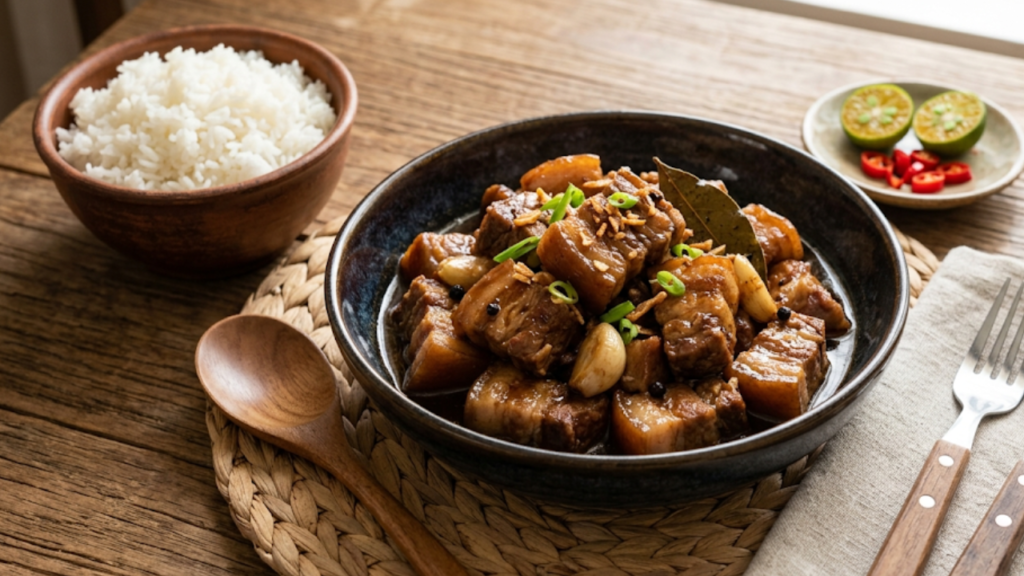
Serve hot with steamed rice, spooning extra sauce over the top.
Tips for Best Results
Use pork belly for richer flavor, or shoulder for a leaner option
Don’t stir immediately after adding vinegar—let it cook first to mellow the acidity
Simmer gently to keep meat tender
Adjust vinegar and soy sauce to suit your taste
Let the dish rest before serving for deeper flavor
Variations
Chicken Adobo: Substitute pork with chicken
Dry Adobo: Reduce sauce further until almost dry
Spicy Version: Add chili peppers
Coconut Adobo: Add coconut milk for a creamy twist
What to Serve With It
Steamed white rice
Garlic fried rice
Pickled vegetables
Simple green salad
Fried egg on top
Storage and Reheating
Refrigerator: Store for up to 4 days
Freezer: Freeze for up to 1 month
Reheating: Warm in a pan over low heat
Tip: Flavor improves after resting overnight
Common Mistakes to Avoid
Using too much vinegar without balancing flavors
Skipping marination
Cooking on high heat (can toughen meat)
Not reducing sauce properly
Overcrowding the pot
Nutritional Facts (Per Serving)
Calories: 420 kcal
Protein: 28g
Carbohydrates: 6g
Fat: 30g
Fiber: 0g
Sugar: 3g
Sodium: 900mg
Cholesterol: 85mg
Conclusion
Filipino pork adobo is a timeless dish that showcases how simple ingredients can create deep, complex flavors. Its balance of savory, tangy, and slightly sweet notes makes it both comforting and satisfying.
Once you master the technique, this recipe becomes a reliable staple in your kitchen. Whether you’re cooking for family or preparing meals ahead, pork adobo delivers consistent, delicious results every time.
FAQs
1. Why is vinegar important in adobo?
Vinegar adds tanginess and helps preserve the dish while balancing the richness of the pork.
2. Can I skip marinating?
Yes, but marinating enhances the flavor significantly.
3. What cut of pork is best?
Pork belly for richness, pork shoulder for a leaner option.
4. Can I make this dish less salty?
Reduce soy sauce or use low-sodium soy sauce.
5. How do I thicken the sauce?
Simmer longer to reduce and concentrate the flavors.