
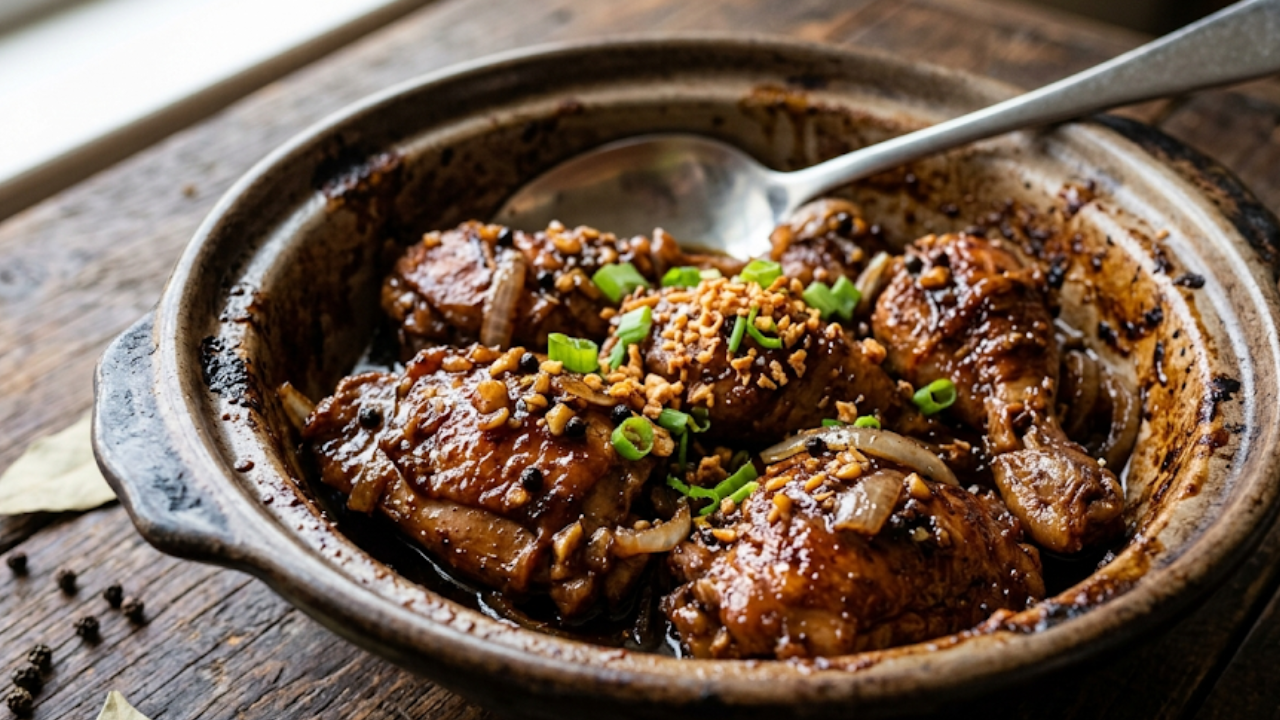
Few dishes capture the heart of Filipino home cooking like chicken adobo. It’s rich, deeply savory, slightly tangy, and incredibly comforting—one of those meals that tastes even better the next day.
What makes Filipino chicken adobo so special is its simplicity. With just a handful of ingredients—chicken, soy sauce, vinegar, garlic, and spices—you get a dish layered with complex flavor. The chicken slowly simmers in a bold, aromatic sauce, absorbing every bit of that signature tangy-salty richness.
This is the kind of recipe that doesn’t rely on complicated techniques. Instead, it rewards patience, balance, and good ingredients. Once you make it properly, it becomes a staple you’ll return to again and again.
Why This Recipe Is Popular / Why You’ll Love It
Chicken adobo is loved worldwide, and for good reason—it’s practical, flavorful, and deeply satisfying.
Bold, balanced flavor – savory, tangy, garlicky, and slightly peppery
Simple ingredients – pantry staples with no fuss
Meal-prep friendly – tastes even better the next day
Versatile – pairs perfectly with rice or vegetables
Authentic comfort food – rooted in tradition and everyday cooking
It’s a dish that feels both humble and deeply flavorful at the same time.
Equipment
Large skillet or heavy-bottom pot
Mixing bowl (for marinating)
Tongs or spatula
Measuring cups and spoons
Lid for the pan
Ingredients
1 kg (2 lbs) chicken (bone-in, skin-on pieces preferred)
½ cup soy sauce
⅓ cup white vinegar
6 cloves garlic, crushed
2–3 bay leaves
1 teaspoon whole black peppercorns
1 tablespoon oil
1 cup water
1 teaspoon sugar (optional, for balance)
Salt to taste (if needed)
Timing and Servings
Prep Time: 10 minutes
Cook Time: 35–40 minutes
Total Time: 50 minutes
Servings: 4 servings
Calories per serving: ~320 kcal
How to Make (Step-by-Step Instructions)
Step 1: Marinate the Chicken
In a bowl, combine chicken, soy sauce, and garlic. Let it marinate for at least 20–30 minutes. If you have time, marinate longer for deeper flavor.
Step 2: Sear the Chicken
Heat oil in a large pan over medium heat. Remove chicken from the marinade (reserve the marinade) and sear until lightly browned on both sides.
Step 3: Add the Marinade
Pour the reserved marinade into the pan. Add bay leaves, peppercorns, and water. Bring to a gentle boil.
Step 4: Add Vinegar (Do Not Stir Yet)
Pour in the vinegar, but do not stir immediately. Let it simmer undisturbed for 2–3 minutes—this helps mellow the acidity.
Step 5: Simmer Until Tender
Lower the heat, cover, and let the chicken simmer for 25–30 minutes until tender and fully cooked.
Step 6: Reduce the Sauce
Uncover and simmer for another 5–10 minutes until the sauce thickens slightly. Taste and adjust with sugar or salt if needed. Serve hot.
Tips for Best Results
Authentic adobo is simple, but technique matters. These tips help you get it just right:
Don’t stir vinegar immediately – this preserves its flavor balance
Use bone-in chicken – adds more depth to the sauce
Let it rest before serving – flavors develop even more
Adjust vinegar to taste – some prefer it tangier, others milder
Simmer gently, not aggressively – keeps chicken tender
Cooking adobo is about patience and letting the ingredients do the work.
Variations
Adobo has many regional and personal variations. Here are a few popular ones:
Chicken and Pork Adobo
Combine chicken and pork for a richer, more complex flavor.
Dry Adobo (Adobo sa Gata-Free Style)
Cook longer until the sauce reduces completely and coats the meat.
Coconut Milk Adobo
Add coconut milk for a creamy, slightly sweet version.
Spicy Adobo
Add sliced chilies or chili flakes for heat.
What to Serve With It
Chicken adobo is best served with simple sides that complement its bold flavor:
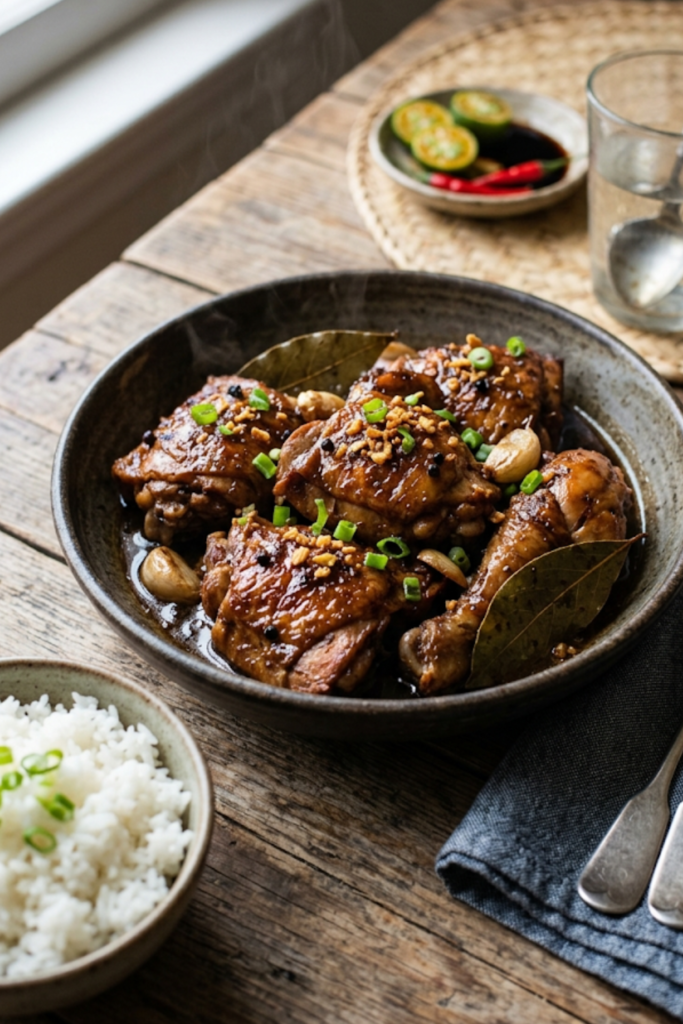
Steamed white rice (traditional pairing)
Garlic fried rice
Pickled vegetables
Steamed greens
Fried eggs (for a hearty meal)
The sauce is rich and flavorful, so something simple like rice balances it perfectly.
Storage and Reheating
Store in an airtight container in the refrigerator for up to 4 days
Reheat gently on the stovetop or microwave
Add a splash of water if the sauce thickens too much
Freezes well for up to 2 months
Adobo often tastes even better the next day as the flavors deepen.
Common Mistakes to Avoid
Adding too much vinegar – can overpower the dish
Skipping the searing step – reduces flavor depth
Overcooking the chicken – makes it dry
Not balancing flavors – always taste before serving
Using low-quality soy sauce – affects overall taste
Getting the balance right is the key to a great adobo.
Nutritional Facts (Per Serving)
Calories: 320 kcal
Protein: 28 g
Carbs: 4 g
Fat: 20 g
Fiber: 0 g
Sugar: 1 g
Sodium: 900 mg
Cholesterol: 110 mg
Conclusion
Filipino chicken adobo is a dish that proves simple ingredients can create something truly unforgettable. Its bold combination of soy sauce, vinegar, garlic, and spices results in a rich, comforting meal that feels both homey and deeply satisfying.
Whether you’re making it for the first time or returning to a familiar favorite, this recipe offers a reliable, authentic approach that delivers every time. Once you taste it, you’ll understand why it’s considered a cornerstone of Filipino cuisine.
Serve it with rice, let the sauce soak in, and enjoy a dish that’s as comforting as it is flavorful.
FAQs
1. What does chicken adobo taste like?
It has a savory, tangy, and slightly garlicky flavor with a rich, umami depth.
2. Can I use boneless chicken?
Yes, but bone-in chicken provides more flavor and keeps the meat juicier.
3. Why shouldn’t I stir vinegar right away?
Letting it cook undisturbed helps mellow its sharp acidity and improves overall flavor.
4. Can I make chicken adobo ahead of time?
Yes, and it often tastes better the next day as the flavors develop.
5. Is chicken adobo spicy?
Traditional adobo is not spicy, but you can add chilies if you prefer heat.