
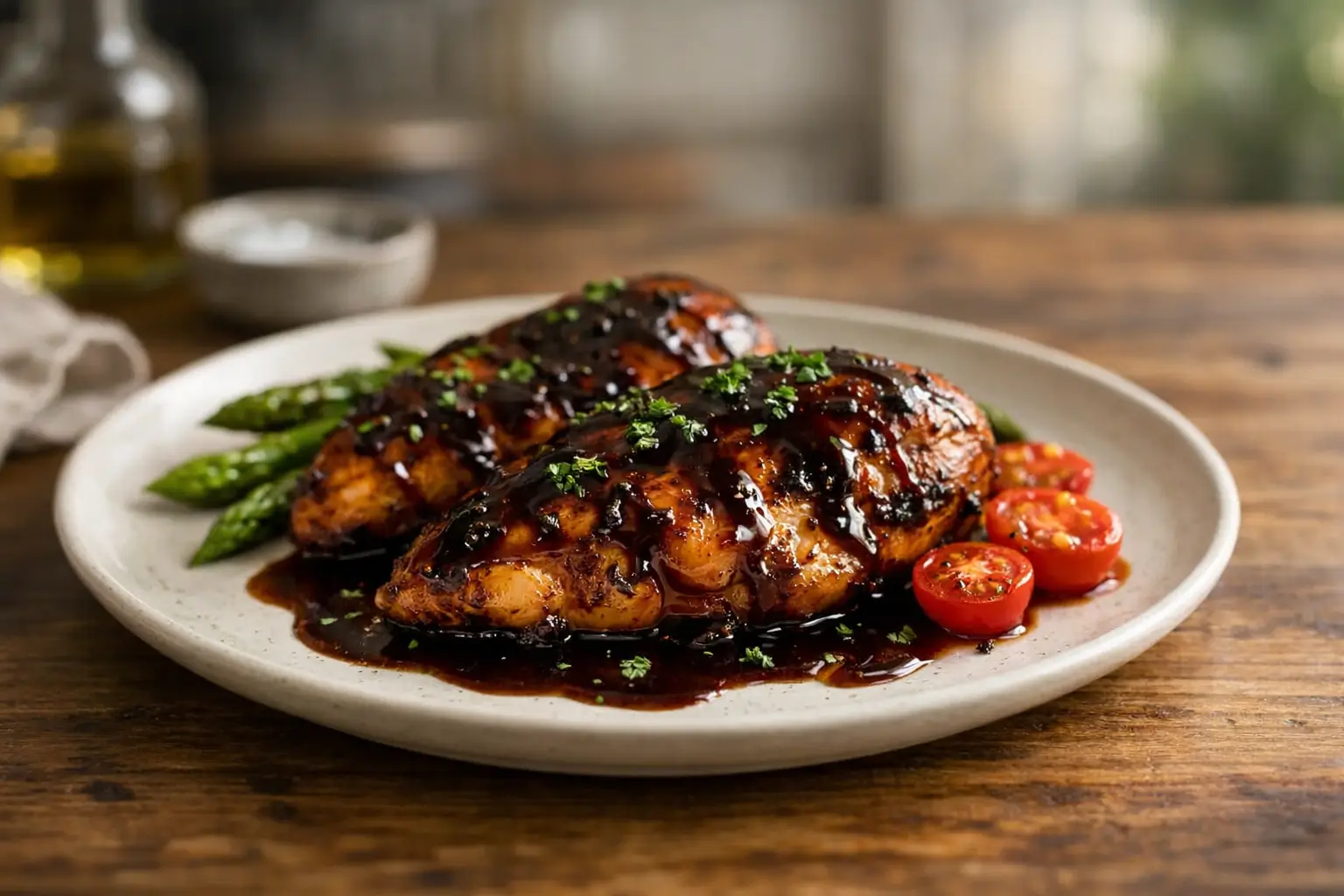
Balsamic glazed chicken is one of those recipes that feels a little more special than the effort it takes. It has that perfect mix of savory, tangy, and lightly sweet flavor that makes a simple chicken dinner taste polished and satisfying. The glaze turns glossy and rich as it cooks, coating the chicken with a bold finish that pairs beautifully with everything from roasted vegetables to mashed potatoes, pasta, or salad.
What makes this dish so dependable is its balance. The chicken stays tender, the balsamic brings brightness, and a touch of honey or brown sugar softens the sharp edges of the vinegar without making the dish overly sweet. Garlic and herbs round everything out and give the sauce the kind of depth that makes it taste like more than just a quick weeknight dinner.
This is the kind of recipe I like keeping in regular rotation because it works for different moods and schedules. It is easy enough for a weekday meal, but elegant enough to serve when you want dinner to feel a little more put together. If you enjoy recipes that deliver strong flavor without complicated steps, balsamic glazed chicken is worth making again and again.
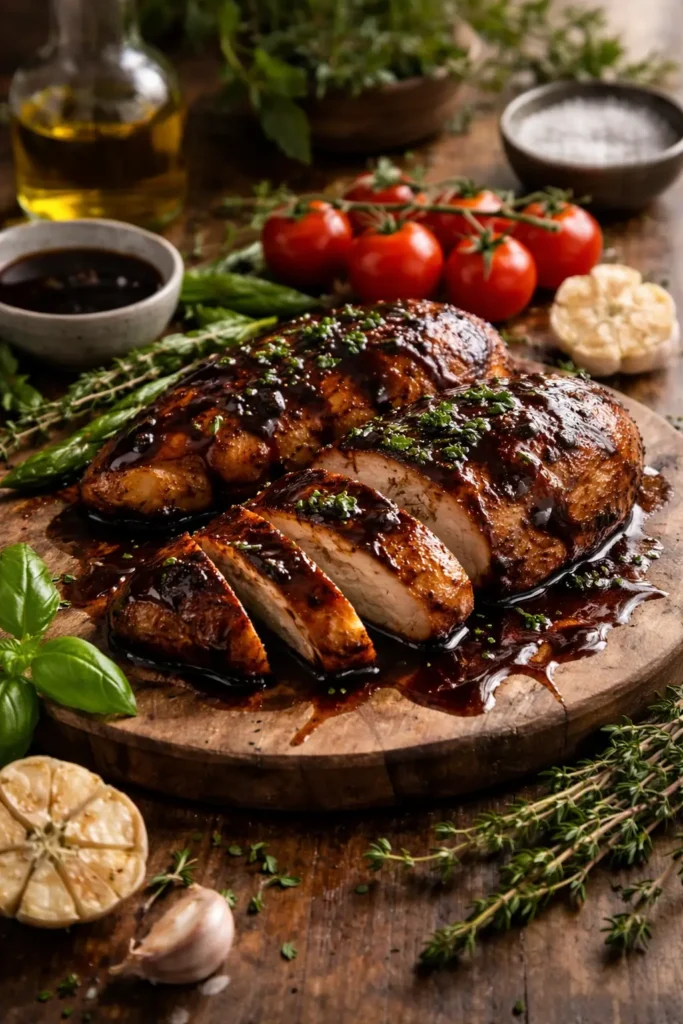
Why You’ll Love This Balsamic Glazed Chicken
A great chicken recipe should be reliable, flavorful, and flexible enough to work with whatever sides you already have in mind. This one checks all the right boxes.
Here’s why it works so well:
Rich, glossy balsamic glaze with sweet and savory flavor
Easy enough for weeknights
Made with simple pantry ingredients
Pairs well with many side dishes
Looks impressive without extra effort
Great for meal prep and leftovers
What Makes Balsamic Glazed Chicken So Good
This recipe is simple, but a few details are what make it stand out.
The glaze reduces into something rich and flavorful
Balsamic vinegar starts out thin and sharp, but when simmered with a little sweetness and seasoning, it becomes smooth, glossy, and concentrated. That reduction is what gives the dish its signature finish.
The chicken stays juicy
Whether you use chicken breasts or thighs, the key is cooking the chicken just until done and then finishing it in the sauce. That keeps it tender instead of dry.
The flavor feels balanced
The best balsamic glazed chicken is not too sharp and not too sweet. It should have enough sweetness to round out the vinegar, enough salt to deepen the flavor, and enough garlic and herbs to make it feel complete.
Equipment
Large skillet or sauté pan
Tongs
Cutting board
Sharp knife
Small bowl
Measuring cups and spoons
Wooden spoon or spatula
Meat thermometer, optional but helpful
Ingredients
For the chicken
4 boneless, skinless chicken breasts or thighs
1 tablespoon olive oil
1 teaspoon salt
1/2 teaspoon black pepper
1/2 teaspoon garlic powder
For the balsamic glaze
1/2 cup balsamic vinegar
2 tablespoons honey or brown sugar
2 cloves garlic, minced
1 tablespoon Dijon mustard
1 tablespoon soy sauce
1 teaspoon dried Italian seasoning
1 tablespoon butter, optional
1 tablespoon chopped fresh parsley, for garnish
Timing and Servings
Prep Time: 10 minutes
Cook Time: 20 minutes
Total Time: 30 minutes
Servings: 4
How to Make Balsamic Glazed Chicken
Step 1: Prepare the chicken
Pat the chicken dry with paper towels. Season both sides with salt, black pepper, and garlic powder.
Drying the chicken first helps it brown better in the skillet. That extra color builds flavor and gives the finished dish a more appetizing look.
Step 2: Mix the glaze ingredients
In a small bowl, whisk together the balsamic vinegar, honey or brown sugar, minced garlic, Dijon mustard, soy sauce, and Italian seasoning.
This mixture will look thin at first, but once it hits the pan and reduces, it thickens into a rich glaze. Do not worry if it seems loose in the bowl.
Step 3: Sear the chicken
Heat the olive oil in a large skillet over medium heat. Add the chicken and cook for about 5 to 6 minutes per side, depending on thickness, until golden brown and nearly cooked through.
Do not move the chicken too much while it cooks. Letting it sit undisturbed helps create a better sear, and that sear adds a lot to the final flavor.
Step 4: Add the glaze
Lower the heat slightly and pour the balsamic mixture into the skillet around the chicken. Let it come to a gentle simmer.
As the sauce cooks, it will begin to reduce and coat the chicken. Use a spoon to baste the chicken with the glaze as it thickens.
Step 5: Simmer until glossy
Cook for another 4 to 6 minutes, turning the chicken as needed, until it is fully cooked and the glaze has thickened enough to cling to the meat.
If you are using a thermometer, the chicken should reach 165°F in the thickest part. The glaze should look shiny and lightly syrupy, not watery.
Step 6: Finish and serve
Stir in the butter if using for a smoother finish, then spoon the glaze over the chicken. Sprinkle with chopped parsley before serving.
That small amount of butter is optional, but it gives the sauce a more polished texture and a softer finish.
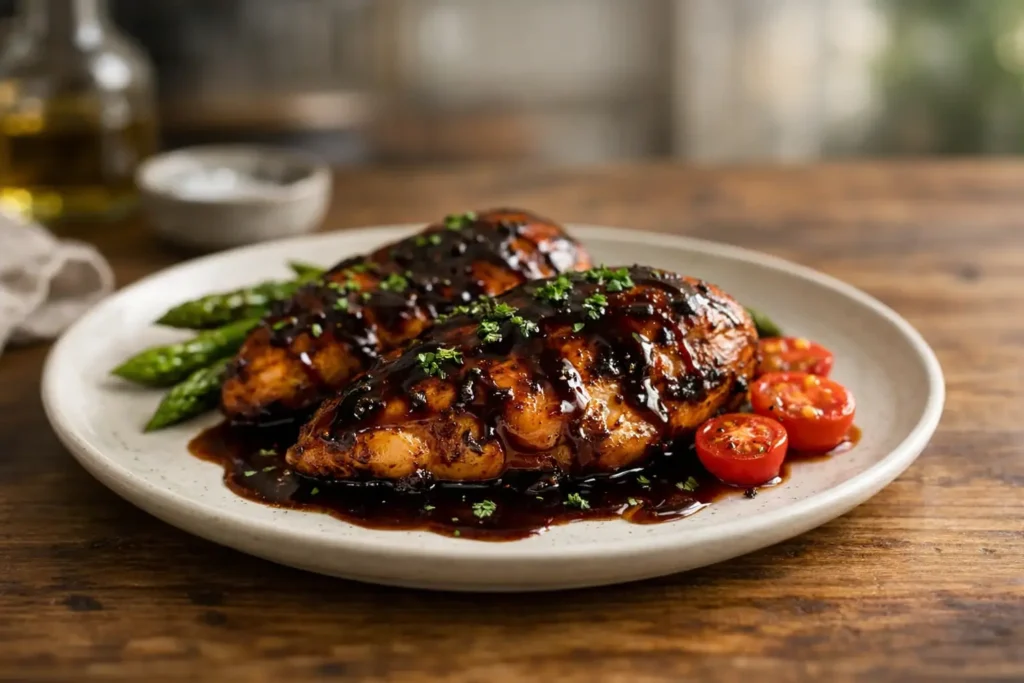
Tips for the Best Balsamic Glazed Chicken
Small adjustments make a big difference with a recipe like this.
Use a good balsamic vinegar
You do not need the most expensive bottle, but a decent-quality balsamic makes the glaze taste smoother and less harsh.
Do not rush the glaze
The sauce needs a few minutes to reduce. If you serve it too early, it will taste thinner and sharper instead of rich and balanced.
Watch the heat
Balsamic glaze can go from perfect to too thick quickly. Keep the heat at a gentle simmer once the sauce is in the pan.
Pound thick chicken breasts if needed
If your chicken breasts are very thick, lightly pound them to an even thickness so they cook more evenly.
Taste the sauce before serving
Different balsamic vinegars vary in acidity. If the glaze tastes too sharp, add a little more honey. If it tastes too sweet, add a splash more balsamic.
Best Side Dishes for Balsamic Glazed Chicken
This chicken is versatile, which makes it easy to build a full meal around it.
It pairs especially well with:
Mashed potatoes
Roasted potatoes
Buttered noodles
Rice or rice pilaf
Steamed green beans
Roasted Brussels sprouts
Garlic broccoli
Mixed greens or arugula salad
Crusty bread
For a lighter meal, serve it sliced over salad. For something more comforting, spoon the extra glaze over mashed potatoes or rice.
Easy Variations to Try
Once you have the base recipe down, it is easy to adjust the flavor depending on what you want.
Balsamic glazed chicken with tomatoes
Add cherry tomatoes to the skillet during the last few minutes of cooking. They soften and add a juicy, slightly sweet contrast.
Balsamic glazed chicken with mushrooms
Sauté sliced mushrooms before cooking the chicken, then let them simmer in the glaze for extra savory depth.
Balsamic herb chicken
Use extra fresh rosemary, thyme, or basil for a more herb-forward version.
Spicy balsamic chicken
Add a pinch of red pepper flakes to the glaze for subtle heat.
Oven-finished balsamic chicken
Sear the chicken on the stove, then transfer it to the oven with the glaze to finish cooking if you prefer.
Nutritional Facts
Approximate per serving:
Calories: 290
Protein: 31g
Carbohydrates: 10g
Fat: 13g
Fiber: 0g
Sugar: 8g
Sodium: 520mg
These values can vary depending on the cut of chicken and the exact ingredients used in the glaze.
How to Store and Reheat
Balsamic glazed chicken stores well, which makes it useful for leftovers and meal prep.
Store in an airtight container in the refrigerator for up to 4 days
Keep extra glaze with the chicken so it stays moist
Reheat gently in a skillet or microwave
Add a splash of water if the glaze thickens too much in storage
This recipe can also be sliced and used in wraps, grain bowls, or salads the next day.
Conclusion
Balsamic glazed chicken is one of those recipes that proves simple ingredients can still create a dinner that feels full of flavor and a little more polished than usual. The glaze is tangy, lightly sweet, and rich enough to make plain chicken feel exciting again. It is the kind of dish that works when you want something fast, but still want dinner to feel thoughtfully made.
Once you try it, it is easy to see why it becomes a repeat recipe. It fits into busy weeknights, works with a wide range of sides, and delivers the kind of bold, balanced flavor that makes people go back for another bite. For a dependable chicken dinner with real flavor and minimal fuss, balsamic glazed chicken is hard to beat.
FAQs
1. Can I use chicken thighs instead of chicken breasts for balsamic glazed chicken?
Yes, chicken thighs work very well and tend to stay extra juicy. Just adjust the cooking time as needed.
2. How do I know when the balsamic glaze is ready?
The glaze should be slightly thickened, glossy, and able to coat the back of a spoon without being overly sticky.
3. Can I make balsamic glazed chicken ahead of time?
Yes. It reheats well and can be stored in the refrigerator for up to 4 days.
4. What if my balsamic glaze tastes too strong?
Add a little more honey or butter to soften the sharpness and create a more balanced finish.
5. Can I bake balsamic glazed chicken instead of cooking it on the stove?
Yes. You can sear it first, then finish it in the oven with the glaze until the chicken is cooked through.
6. What goes well with balsamic glazed chicken?
Mashed potatoes, rice, pasta, roasted vegetables, green beans, salad, and crusty bread all pair nicely with this dish.